معرفی
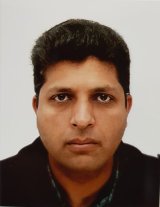
Sharmilan Suntharalingam is a Postdoctoral Researcher in the Department of Environmental and Resource Engineering at the Technical University of Denmark (DTU), specializing in Materials & Durability. His research focuses on cement-based materials durability, concrete deterioration mechanisms, and infrastructure resilience under climate change and industrial conditions, contributing to UN Sustainable Development Goals.
Dr. Suntharalingam earned his PhD from DTU in 2024 with a thesis on modeling climate change impacts on infrastructure durability, supervised by Prof. Anders Michel and Prof. Henrik Stang. His academic trajectory demonstrates deep expertise in concrete science and environmental resilience engineering.
His core research spans carbonation processes, chloride transport, autogenous shrinkage in blast furnace slag cements, and cyclic environmental deterioration. He employs advanced numerical modeling to simulate gas-ion-solid interactions in pore solutions, predicting long-term infrastructure behavior under extreme conditions like oil well abandonment and climate stressors.
Publication analysis reveals a strong interdisciplinary trend integrating civil engineering, materials science, and climate adaptation. His recent work extends reactive transport models to cyclic wetting-drying scenarios and oil well applications, emphasizing predictive durability frameworks for sustainable infrastructure.
Scientific recognition includes:
- Sund & Bælt Hackathon 2019 award for innovative infrastructure solutions
Dr. Suntharalingam contributed to two major DTU projects: oil-well cement durability (2021-2024) and climate change impact modeling (2019-2024). These involved cross-disciplinary collaboration with industry partners on grant-funded research targeting concrete deterioration mechanisms and adaptation strategies.
He operates within DTU's Materials & Durability research group, collaborating with leading experts in concrete technology to develop next-generation infrastructure solutions addressing carbonation, chloride ingress, and climate resilience challenges.