

معرفی
Sir Shankar Balasubramanian is the Herchel Smith Professor of Medicinal Chemistry in the Department of Chemistry at the University of Cambridge, a Senior Group Leader at the Cancer Research UK Cambridge Institute, and a Fellow of Trinity College, Cambridge. He has been a prominent figure at Cambridge since beginning his independent academic career in 1994, progressing through various academic ranks to his current professorship.
Born in Madras (now Chennai), India in 1966, Balasubramanian moved to the UK with his parents in 1967. He was educated at Daresbury Primary School and Appleton Hall High School (now Bridgewater High School) before studying the Natural Sciences Tripos at Fitzwilliam College, Cambridge, where he completed his undergraduate degree from 1985 to 1988. He continued at Cambridge for his PhD research on the reaction mechanism of the enzyme chorismate synthase under the supervision of Chris Abell (1988-1991). Following his PhD, he worked as a SERC/NATO Research Fellow in the group of Stephen J. Benkovic at Pennsylvania State University (1991-1993) before returning to Cambridge.
Professor Balasubramanian is an internationally recognized leader in the field of nucleic acids chemistry. His research focuses on understanding the structure and function of DNA and RNA, with particular emphasis on non-canonical structures like G-quadruplexes and epigenetic modifications. He is best known as a principal inventor of Solexa sequencing technology, which revolutionized next-generation DNA sequencing and made routine, accurate, low-cost sequencing of human genomes a reality. His work on G-quadruplexes has revealed their prevalence in the human genome and potential roles in gene regulation and cancer biology. More recently, his research has focused on developing chemical methods to study epigenetic changes to DNA bases, including single-base resolution sequencing of 5-formylcytosine, 5-hydroxymethylcytosine, and 5-methylcytosine.
Analysis of Professor Balasubramanian's publication record reveals a consistent focus on nucleic acids chemistry and its applications to biological and medical problems. His research has evolved from fundamental studies of DNA structure to the development of transformative technologies for genome analysis. The recurring themes in his work include the chemical manipulation of nucleic acids, the development of novel sequencing methodologies, and the exploration of non-canonical DNA structures and epigenetic modifications. His publications demonstrate a remarkable ability to bridge chemistry, biology, and technology development, resulting in research that has both theoretical significance and practical applications in medicine and biotechnology.
Professor Balasubramanian's exceptional contributions to science have been recognized with numerous prestigious awards:
- Breakthrough Prize in Life Sciences (2022)
- Millennium Technology Prize (2020)
- Royal Medal (2018)
- Knight Bachelor (2017)
- Tetrahedron Prize (2013)
- Corday–Morgan Medal and Prize (2002)
- Fellow of the Royal Society (2012)
- Member of the European Molecular Biology Organization (2012)
- Fellow of the Academy of Medical Sciences (2011)
- Canada Gairdner International Award (2024)
As an academic advisor, Professor Balasubramanian has mentored numerous researchers, including his doctoral student Julian Huppert. His research has been supported by significant grants from Cancer Research UK and other funding bodies, enabling his group to maintain laboratories in both the Department of Chemistry and the Cancer Research UK Cambridge Institute at the Cambridge Biomedical Campus. His work on Solexa sequencing technology led to the founding of Solexa (later acquired by Illumina), and he is also the scientific founder of biomodal (formerly Cambridge Epigenetix), demonstrating his ability to translate fundamental research into commercial applications that benefit human health.
Professor Balasubramanian directs the Balasubramanian Group, which includes researchers from diverse backgrounds including chemistry, biology, and computational sciences, working collaboratively to advance our understanding of DNA structure and function and to develop new technologies for genome analysis. The group maintains facilities at the Department of Chemistry and the Cancer Research UK Cambridge Institute, where they continue to pioneer methods for studying nucleic acids and their roles in health and disease.
Shankar Balasubramanian در سایتهای دیگر
جستوجوهای مرتبط
شاید اینها هم برایتان مناسب باشند
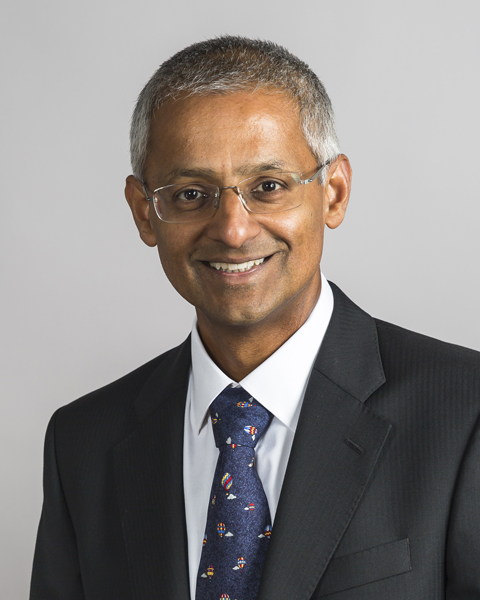 Balasubramanian ShankarGraz University of Technology · استاد
- KKatrin PaeschkeRhenish Friedrich Wilhelm University of Bonn · استاد
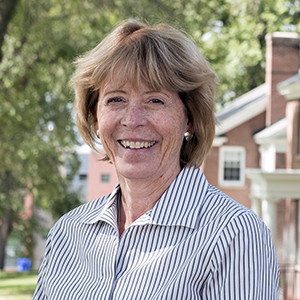 Cynthia J. BurrowsUniversity of Utah · استاد
 David KlenermanMax Planck Institute for Mathematics · استاد
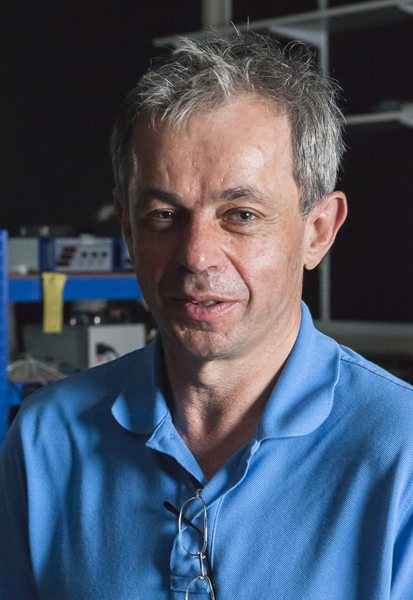 David KlenermanGraz University of Technology · استاد
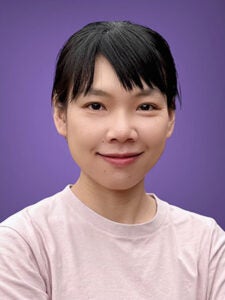 Xiaomei HeEast Carolina University · استادیار