معرفی
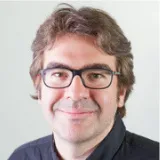
Professor Sergi Garcia-Manyes is a tenured Professor of Biophysics at King's College London, jointly appointed in the Department of Physics and the Randall Division of Cell and Molecular Biophysics. He directs the Mechanics of Life Leverhulme Doctoral Scholarship Programme and leads the Biological Physics Across Scales Centre for Doctoral Training. His laboratory specializes in single-molecule biophysics and mechanobiology research.
Education:
- BSc in Chemistry (Honors) from University of Barcelona (2000)
- MSc in Analytical Chemistry from University of Barcelona (2001)
- PhD in Physical Chemistry from University of Barcelona (2005)
Research Focus: Garcia-Manyes investigates how mechanical forces regulate biological processes at molecular and cellular scales. His work combines atomic force microscopy, force-clamp spectroscopy, and magnetic tweezers to study:
- Protein folding pathways under mechanical tension
- Nanomechanics of lipid bilayers and cellular membranes
- Force-dependent chemical reactions (mechanochemistry)
- Nuclear transport mechanisms regulated by protein mechanics
- Single-molecule dynamics in physiological contexts
Publication Trends: His 69+ publications demonstrate consistent focus on single-molecule biophysics, with recent work expanding into mechanobiology applications in development and disease. Key themes include protein folding energy landscapes, nuclear pore transport mechanics, and innovative force spectroscopy methodologies.
Awards & Honors:
- Spanish Biophysical Society Award (2012)
- EPSRC Early Career Fellowship
Research Leadership: He leads a multidisciplinary team of PhD students and postdoctoral researchers, secured through grants from:
- European Union (Marie Curie Actions)
- Biotechnology and Biological Sciences Research Council (BBSRC)
- Royal Society
- British Heart Foundation
- Fight for Sight
Facilities & Collaboration: His lab operates within King's state-of-the-art biophysics facilities and collaborates with the London Centre for Nanotechnology and Francis Crick Institute. He co-founded the King's MechanoBiology Centre and directs the Leverhulme-funded Mechanics of Life doctoral program.