معرفی
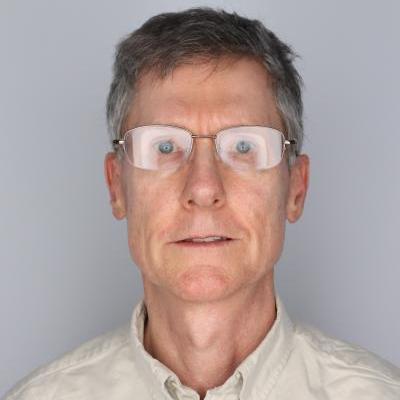
Scott Joseph Larson serves as a Limited Term Lecturer within the Department of Mathematics at the University of Georgia, where he maintains an office in the Boyd Graduate Studies Research Center (623 Boyd GSRC). His professional presence is supported by the university's Franklin College of Arts and Sciences, though his primary academic affiliation is with the Mathematics Department. Dr. Larson is an active researcher with a focus on algebraic structures and their geometric interpretations, contributing to the department's strength in pure mathematics.
Dr. Larson's research program centers on the interplay between Lie groups and algebraic varieties, particularly investigating how group actions on flag varieties lead to deep connections with categorification, representation theory, and combinatorial structures. His work often addresses fundamental questions in geometric representation theory, including the study of Schubert varieties, small resolutions of singularities, and the combinatorial aspects of positivity in algebraic geometry. This research sits at the intersection of several major mathematical disciplines, yielding insights applicable to both theoretical and computational mathematics.
Analysis of his publication record reveals a consistent trajectory in advancing the understanding of geometric representation theory through concrete algebraic and combinatorial methods. His most recent work on positivity in weighted flag varieties builds upon earlier contributions to the Lusztig-Vogan module categorification and decompositions of Schubert varieties. This progression demonstrates his commitment to solving challenging problems in algebraic geometry and representation theory, often employing innovative approaches that bridge multiple subfields.
No scientific awards or honors were documented in the available materials.
While Dr. Larson's role as a lecturer suggests teaching responsibilities, the provided information does not specify details about graduate student advising or external research funding. His professional website and arXiv publications indicate ongoing scholarly activity, but grant history remains unreported.
There is no mention of dedicated research laboratories or collaborative teams in the source materials, though his work appears to be conducted within the broader mathematical community at the University of Georgia and through collaborations evidenced by co-authored publications.