معرفی
Saurabh Kulkarni serves as Assistant Professor in the Department of Cell Biology at the University of Virginia, holding a courtesy appointment with the Center for Membrane and Cell Physiology. His research integrates quantitative cell biology and functional genomics to investigate cilia assembly mechanisms, centriole biogenesis, and the molecular basis of human birth defects using Xenopus models. The lab employs cutting-edge techniques including super-resolution imaging, CRISPR-Cas9, and biomechanical analysis to address fundamental questions in developmental biology.
Dr. Kulkarni completed his Ph.D. in Biology at the University of Cincinnati in 2012 followed by postdoctoral training at Yale University School of Medicine until 2019. His educational trajectory established expertise in molecular developmental biology and quantitative approaches to cellular organization.
Research focuses on three interconnected pillars:
- Cilia Dynamics - Uncovering how cells construct sensory and motile cilia critical for developmental signaling
- Centriole Regulation - Deciphering cellular mechanisms for counting and positioning centrioles in multiciliated cells
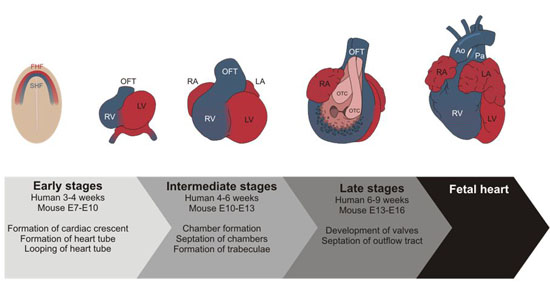
- Birth Defect Modeling - Using Xenopus to validate genetic variants causing hydrocephalus, congenital heart disease, and respiratory disorders
Analysis of his 15 most recent publications (2014-2025) reveals evolving emphasis from endocrine signaling in metamorphosis toward cilia/centriole mechanobiology. Key trends include Piezo1-mediated mechanotransduction in centriole scaling, CRISPR-based disease modeling for ciliopathies, and integration of AlphaFold for protein structure prediction. His work consistently connects cellular organelle dynamics to human congenital disorders affecting heart, lung, and brain development.
No individual scientific awards or fellowships are documented, though several publications received notable recognition including F1000 recommendations, research highlights, and media coverage across Phys.org and EurekAlert.
Dr. Kulkarni mentors graduate students (Angelo Arrigo, Savanna Hinson) and postdoctoral researchers within NIH T-32 funded training programs including Biomedical Sciences and Medical Scientist Training. The lab operates within UVA's Developmental Genomics Center and Child Health Research Center, utilizing resources from multiple institutional affiliations to pursue translational research goals.
The Kulkarni Lab maintains state-of-the-art facilities including NIKON AX-R and LEICA SP8 confocal microscopes, custom mechanical stretchers, and microinjection systems. The team employs diverse models from Xenopus embryos to stem cell organoids, supported by computational biology pipelines and collaborations with Inova Health System for clinical translation.