معرفی
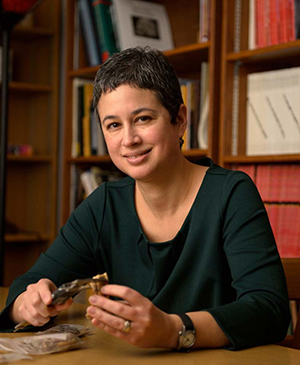
Dr. Sarah Schrader is an Associate Professor at the Faculty of Archaeology, Leiden University, where she serves as Head of the Laboratory for Human Osteoarchaeology. Her academic journey began with a BA from the University of California, Santa Barbara (2006), followed by an MS (2010) and PhD (2013) in Anthropology from Purdue University. She has held academic positions at Western Michigan University, University of California Santa Cruz, University of Notre Dame, and Leiden University since 2017, where she was promoted to Associate Professor in 2024.
Dr. Schrader's educational background includes:
- PhD in Anthropology, Purdue University (2013), with distinction
- MS in Anthropology, Purdue University (2010), with distinction
- BA, University of California, Santa Barbara (2006), with honors
Her research focuses on the bioarchaeological analysis of human skeletal remains to address questions about everyday life, social inequality, health, disease, migration, and activity patterns in past societies. Dr. Schrader employs both macroscopic and biomolecular approaches, including isotopic analysis, proteomics, and CT scanning, to investigate diet, mobility, stress, and health in ancient populations. Her work spans multiple geographic regions including the Nile Valley (Egypt and Sudan), the Low Countries (Netherlands and Belgium), and other European and South American sites. She has worked on multiple international projects across The Netherlands, Belgium, France, Sudan, Egypt, Chile, Portugal, and the United States.
Dr. Schrader's recent publications reveal a strong focus on the intersection of social inequality and health outcomes in historical populations, particularly in the Dutch post-medieval period. Her work combines skeletal analysis with biomolecular techniques to examine how socioeconomic status impacted health, respiratory conditions, and physical stress. She also maintains a significant research program in Nubian archaeology, investigating state formation, colonial encounters, and daily life in ancient Sudan and Egypt. Her 2024 publication 'Decolonizing Bioarchaeology in Sudan' demonstrates her commitment to ethical approaches in the study of human remains from formerly colonized regions.
Dr. Schrader has received numerous scientific awards that highlight her contributions to both research and teaching:
- Mentorship Award, British Association for Osteoarchaeology and Biological Anthropology Association (2023)
- Emerging Voice Award, College of Liberal Arts, Purdue University (2022)
- The (Dutch) University Teaching Qualification, Basis Kwalificatie Onderwijs (BKO) (2019)
- Early Career Award, Paleopathology Association (2016)
- Accessibility Leadership Award, University of California, Santa Cruz (2016)
As a dedicated mentor, Dr. Schrader has supervised numerous PhD and MSc students, with many completing theses on topics related to osteoarchaeology, paleopathology, and bioarchaeology. She currently leads several major research projects, including the NWO VIDI-funded 'Embodied Inequality' project (2021-2026), which examines the health impacts of socioeconomic inequality in ancient Kush, and the NWO XS grant 'The Evolution of Stress' (2024-2025), which investigates ancient stress hormones. Her laboratory work combines traditional osteological methods with cutting-edge CT scanning and biomolecular techniques to extract maximum information from human skeletal remains.
Dr. Schrader leads the Laboratory for Human Osteoarchaeology at Leiden University, which serves as a hub for research on human skeletal remains from various time periods and geographic regions. The lab facilitates collaborative research with institutions including the Leiden University Medical Center (LUMC), where they conduct CT scanning of skeletal material to study bone quality through time. Her team also collaborates with international partners in Sudan, Egypt, Chile, and the United States on various archaeological projects.