معرفی
Sarah E. Parkinson is the Aronson Assistant Professor of Political Science and International Studies at Johns Hopkins University. She is a political scientist specializing in conflict, militant organizations, and social networks in wartime contexts, with a regional focus on the Middle East. She is also the co-founder of the Advancing Research on Conflict (ARC) Consortium, which promotes collaborative scholarship on political violence and conflict dynamics.
Her research centers on how non-state armed groups adapt and survive under conditions of repression, displacement, and fragmentation. Drawing on extensive ethnographic fieldwork in Palestinian communities during the Lebanese civil war (1975–1990), she investigates how social infrastructures are repurposed for organizational resilience. Her work highlights the critical role of everyday social ties in sustaining logistics, intelligence, healthcare provision, and internal cohesion within militant organizations.
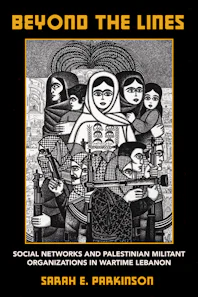
Her 2023 book, Beyond the Lines: Social Networks and Palestinian Militant Organizations in Wartime Lebanon, published by Cornell University Press, has been widely recognized for its original insights and rigorous methodology. The book analyzes how variations in state violence by Israeli, Syrian, and Lebanese forces led to divergent organizational responses among Palestinian factions. It demonstrates that survival and adaptation in asymmetric warfare are deeply rooted in the mobilization of kinship, neighborhood, and community networks.
The publications reflect a strong thematic focus on the intersection of social structure and political violence, particularly in protracted conflicts. Her work bridges qualitative ethnography with theoretical frameworks in political science and sociology, offering nuanced understandings of rebel group behavior beyond conventional military analysis.
- Assistant Professor, Political Science and International Studies, Johns Hopkins University
- Co-founder, Advancing Research on Conflict (ARC) Consortium
She advises on conflict-related research and contributes to academic discourse through publications and public engagement, including social media (@se_parkinson). While no formal list of advisees or grants is provided, her leadership in the ARC Consortium suggests active mentorship and collaborative research efforts.
Parkinson’s scholarly contributions are primarily institutionalized through her academic position and major publication. She does not appear to lead a named laboratory or research center, but her consortium involvement indicates leadership in building research networks focused on conflict studies.