معرفی
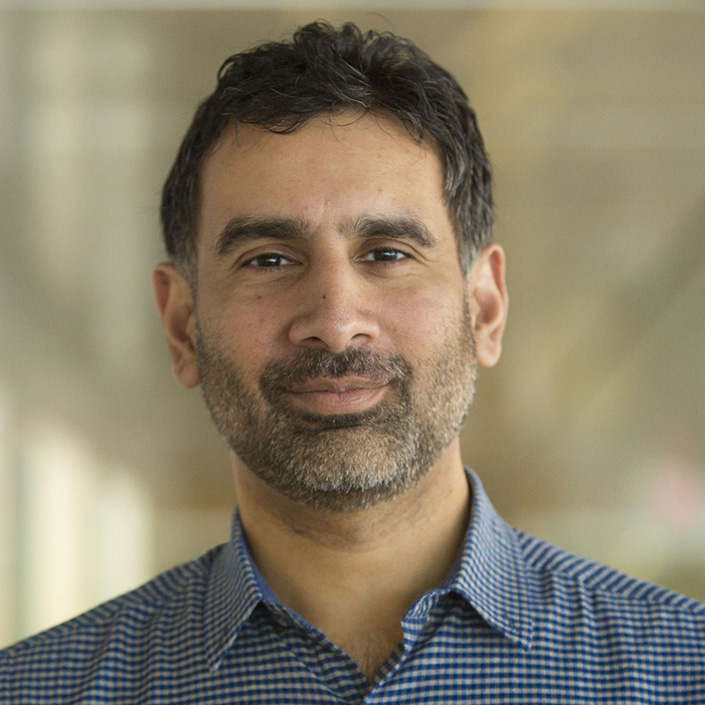
Sanli Faez is an Associate Professor in the Nanophotonics section of the Debye Institute for Nanomaterials Science at Utrecht University's Faculty of Science. His research focuses on non-conventional methods of imaging in scattering materials by integrating concepts from space-time wavefront shaping, compressive sensing, adaptive optics, and optical metrology. He serves as the principal investigator for the nano-EPics research team and contributes to the Pathways to Sustainability initiative with a focus on Energy in Transition.
Dr. Faez is actively involved in several important scientific initiatives, including serving as the Open Science Lead at the Dutch Climate Research Initiative (KIN), being a founding member of Lili's Proto Lab, and acting as an editor for HardwareX journal. He is also a board member of The Young Academy of KNAW and participates in the Center for Unusual Collaborations.
- Physics
- Nanotechnology
- Climate Policy
- Open Science
His research publications demonstrate expertise in imaging through complex media, with recent work focusing on special light waves that can penetrate opaque materials, advanced computational imaging techniques, and nanoscale particle localization. These publications appear in prestigious journals including Nature Photonics, Physical Review Letters, and Optics Express, highlighting his contributions to both fundamental and applied optics research.
Dr. Faez has received recognition through leadership positions rather than traditional scientific awards, including his role as principal investigator for multiple research projects and his appointment to influential boards focused on climate research and open science initiatives.
He actively mentors students and researchers through his laboratory at Utrecht University, where he emphasizes hands-on experimentation and innovation. His Physics of Light in Complex Systems laboratory provides researchers the opportunity to create their own measurement setups, fostering creativity and independent thinking in the next generation of scientists.