معرفی
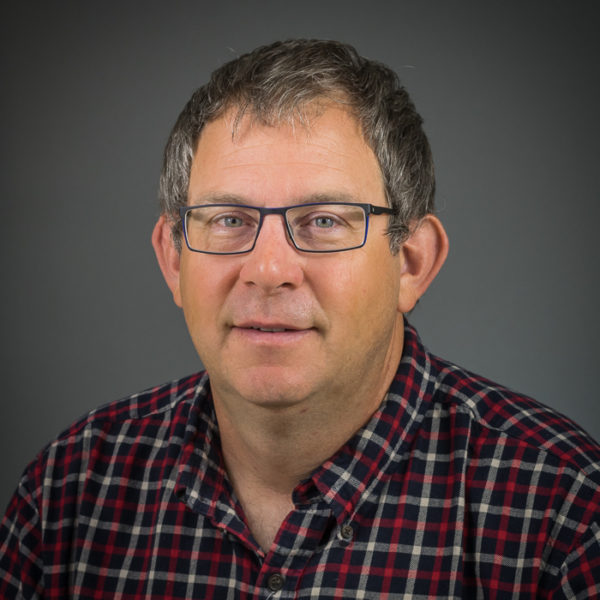
Sangay Wangchuk is a researcher and educator currently affiliated with Charles Sturt University (CSU), Australia, where he completed his PhD in Human Geography in 2023. His academic journey includes an MSc in Resource Conservation from the University of Montana, USA, and a BSc in Forestry from Dr. Y.S. Parmar University of Horticulture and Forestry, India. He has extensive experience in conservation research and teaching, having served for fourteen years at the Ugyen Wangchuck Institute for Conservation and Environment Research (UWICER), Royal Government of Bhutan.
- BSc Forestry, Dr. Y.S. Parmar University, India (2006)
- MSc Resource Conservation, University of Montana, USA (2011)
- PhD Human Geography, Charles Sturt University, Australia (2023)
Sangay's research focuses on the intersection of human geography and environmental conservation, particularly human-wildlife conflict, rural depopulation, forest management, and livelihoods in Bhutan. His doctoral work explored Gungtong—abandoned houses—and their links to human-wildlife conflict. He has contributed to international research on Asiatic black bears and ecosystem services, especially under hydropower development. His work aligns with multiple UN Sustainable Development Goals, particularly those related to sustainable communities and life on land.
The most recent articles (2020–2023) reflect a strong trend in socio-ecological research, combining field data with policy implications. Topics span from biodiversity conservation and bear ecology to rural abandonment and food self-sufficiency, indicating a holistic approach to environmental challenges in mountainous and developing regions. His publications appear in journals such as Sustainability and Mountain Research and Development, as well as in peer-reviewed book chapters with Cambridge University Press.
Scientific Contributions and Recognition:
- National Coordinator, TEEB Bhutan (EU & UNEP-funded)
- National Coordinator, 14th World Ethnobiology Congress (2014)
- National Coordinator, 10th World Dendrochronology Congress (2018)
- Editorial reviewer, National Water Symposium 2017
- Press contributor on human-wildlife conflict (2022)
Sangay has been actively involved in academic leadership and capacity building. He served as Program Director for the UNESCO Madanjeet Centre for South Asia Forestry Studies, coordinating BSc and MSc programs for students across seven countries. He has supervised research and mentored students indirectly through teaching roles in courses like Natural Resource Management (ENM 163) and People and Environment (ENM 101). While no formal grants are listed, his involvement in EU- and UNEP-funded projects indicates significant grant-related experience. His research outputs suggest ongoing engagement with both academic and policy communities.
He has contributed to collaborative research networks involving institutions in Bhutan, Australia, Japan, and Europe, particularly in wildlife ecology and conservation science. His work with camera trapping, ethnographic methods, and ecosystem service valuation demonstrates interdisciplinary teamwork. Future research directions likely include expanding the Gungtong study into broader migration and conservation policy frameworks.