معرفی
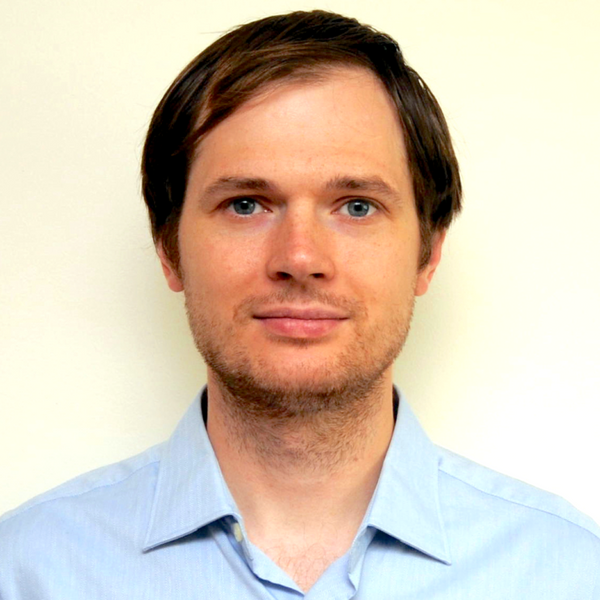
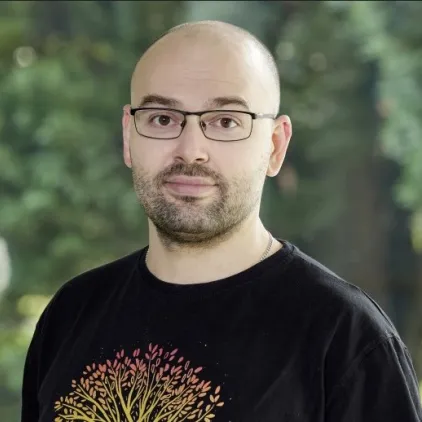
Sandor Vajda is a Professor of Scientific Computing at Boston University, specializing in computational approaches to macromolecular modeling and drug discovery. His work bridges chemistry, computer science, and biomedical research with a focus on developing predictive algorithms for protein interactions.
He holds an M.S. in Electrical Engineering from Moscow, Russia; an M.S. in Applied Mathematics from Budapest, Hungary; and a Ph.D. in Chemistry from Budapest, Hungary. His educational background reflects the interdisciplinary nature of his computational research.
Vajda's research centers on protein-ligand docking, conformational analysis, and empirical free energy potential development. He pioneered tools like ClusPro for protein-protein docking and FTMap for binding site mapping, enabling structure-based drug design. His work addresses critical challenges in distinguishing near-native protein conformations from non-native models and optimizing docking algorithms for therapeutic applications.
Analysis of his 2023-2025 publications reveals three key trends: leveraging AlphaFold2 for protein conformation prediction (notably its limitations in binding site diversity), advancing cryptic/allosteric site druggability assessment, and developing specialized servers like E-FTMap and MHC-Fine for fragment expansion and immune response modeling. His research increasingly integrates deep learning with traditional computational methods.
While specific advisory roles and grant details aren't documented in the provided materials, his 15+ annual publications indicate active collaboration across computational biology, structural bioinformatics, and pharmaceutical research groups. The absence of laboratory descriptions suggests his work primarily involves computational infrastructure rather than wet-lab facilities.