معرفی
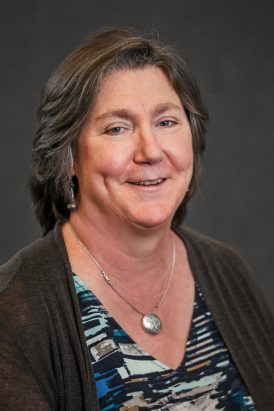
Sally Howell serves as Associate Professor of History at the University of Michigan-Dearborn and Director of the Center for Arab American Studies. She holds affiliations with the Global Islamic Studies Center, the Center for Middle Eastern & North African Studies (CMENAS), and the Islamic Studies Program. Her academic work bridges historical, cultural, and urban studies perspectives with a focus on American Muslim communities.
Howell's research specializes in Arab American and Muslim American history and culture, particularly examining the impact of the war on terror in Detroit. Her scholarly approach combines historical analysis with contemporary urban studies, focusing on how religious minorities navigate public spaces and community development. She investigates the complex relationships between mosques, markets, and neighborhood development across Michigan's urban and suburban landscapes.
Her publications reveal a consistent focus on documenting and analyzing the Muslim American experience, with particular attention to Detroit's historical and contemporary significance. Howell's work demonstrates how religious identity, cultural heritage, and urban development intersect in American communities, creating rich narratives of resilience and adaptation.
Howell has received significant recognition for her scholarly contributions, including:
- Michigan Notable Book Award from the Library of Michigan for Old Islam in Detroit
- Evelyn Shakir Award from the Arab American National Museum
As Director of the Center for Arab American Studies, Howell oversees research initiatives, academic programming, and community engagement efforts. Her leadership supports interdisciplinary scholarship that examines the historical and contemporary experiences of Arab Americans through multiple academic lenses.
Howell's academic trajectory demonstrates sustained commitment to documenting and analyzing the Muslim American experience, with particular attention to Detroit's significance as a historical center of Muslim community development in the United States. Her forthcoming work continues this trajectory, exploring how religious minorities shape and are shaped by urban environments.