معرفی
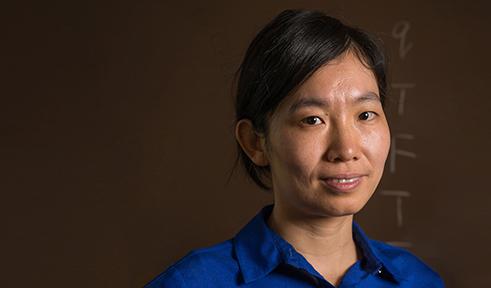
Ronaldo Vigo is an Associate Professor in the Department of Psychology at Ohio University's College of Arts and Sciences, where he conducts research and teaches in mathematical and computational cognitive science. He is based in Porter Hall and can be reached at vigo@ohio.edu or (740) 593-1089.
Research Interests: Dr. Vigo's research centers on the development of mathematical and computational models of human cognition, particularly in concept learning, categorization, similarity assessment, and perception. He investigates why some concepts are harder to learn than others and whether structural context influences cognitive processes. His work is grounded in the detection of invariance structures in categorical stimuli, leading to non-probabilistic, algebraic models that predict learning difficulty without free parameters.
His key theoretical contributions include the Generalized Invariance Structure Theory (GIST) and Representational Information Theory (RIT), which have been applied in empirical studies using eye-tracking technology in the SCOPE LAB (Structure, Concepts, and Perception Laboratory). This lab explores gaze patterns during category learning and the role of structural context in decision-making and similarity judgments.
Publication Trends: His publications from 2006 to 2016 reflect a consistent focus on formal modeling of cognition, with increasing integration of empirical methods like eye tracking. The work spans theoretical advances in information theory, structural complexity, and categorization, often bridging cognitive science with mathematical rigor.
- Scientific Awards: No awards were mentioned in the provided text.
Advising and Grants: Dr. Vigo is actively mentoring PhD students and accepting new advisees. His research is supported through laboratory-based empirical work and theoretical development. He has supervised graduate students in projects involving concept learning, categorization, and decision behavior.
Labs and Teams: He leads the SCOPE LAB, which integrates computational modeling with psychophysical and eye-tracking methodologies to study human cognition.