معرفی
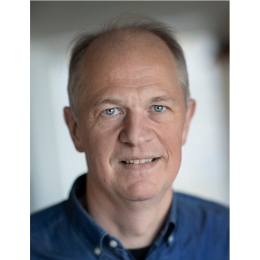
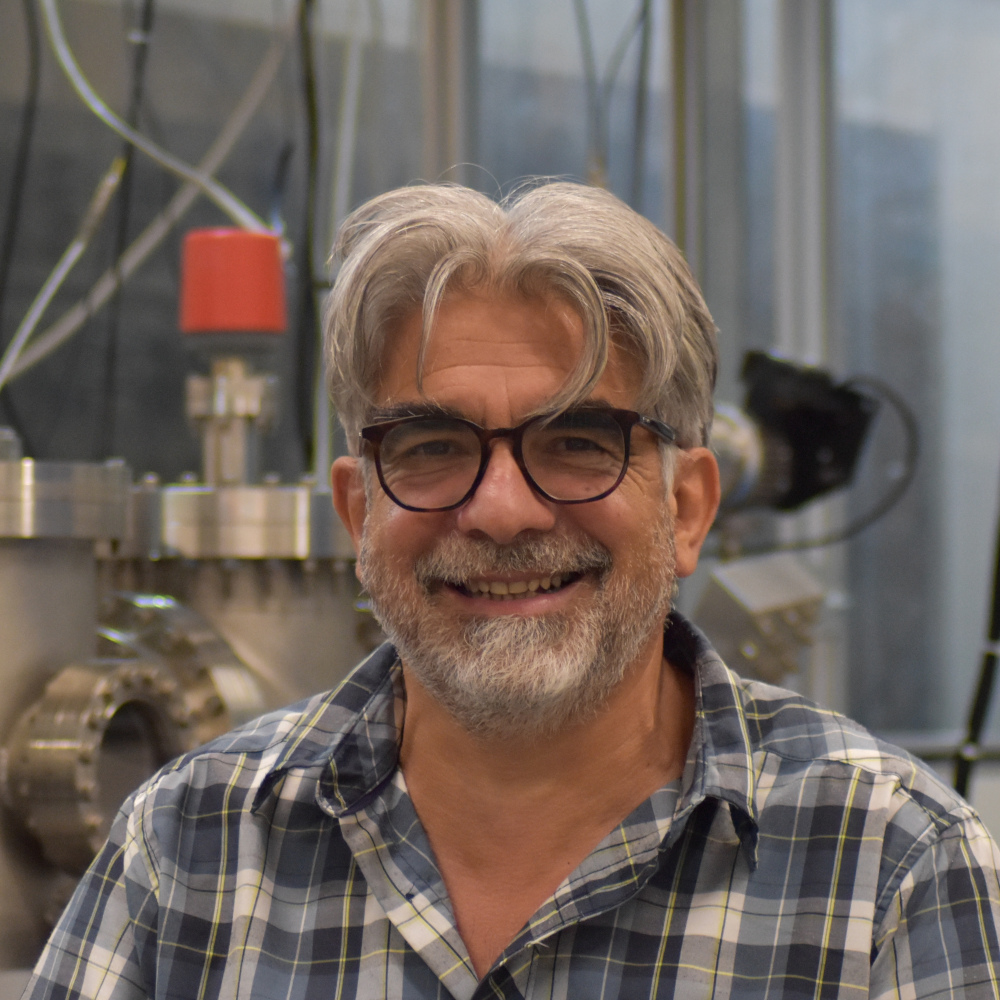
Ronald MacTaylor is a Professor in the Department of Chemistry and Physics at Salem State University, where he has held a faculty position since 1998 and served as Department Chair from 2013 to 2022. His current teaching responsibilities include College Physics I (PHS 211A), College Physics II (PHS 212A), General Physics III (PHS 311), and Physical Science I (PHS 101A), all utilizing OpenStax College Physics as a free online textbook with supplementary video content delivered via Canvas.
Dr. MacTaylor earned his Ph.D. in Physical Chemistry from Pennsylvania State University in 1998 under Dr. A. W. Castleman, Jr., with a dissertation titled "Molecular Activation by Surface Coordination: Insight into Heterogeneous Atmospheric Chemistry through Cluster-Ion Molecule Reactions." He completed his undergraduate studies with a Bachelor of Science in Chemistry from Gordon College in 1990.
His research spans Atmospheric Chemistry, Physical Chemistry, and Physics Education, focusing on cluster-ion reactions relevant to stratospheric processes and innovative applications of physics to real-world phenomena. Notable projects include analyzing the physics of skydiving trajectories and motocross track design, which serve as pedagogical tools to engage students in applied physics concepts.
MacTaylor's publication record (1996-2000) centers on atmospheric reaction mechanisms, particularly ion-molecule interactions in cluster systems and surface coordination models for HCl reactivity on polar stratospheric clouds. His work demonstrates consistent exploration of temperature-dependent kinetics, metal ion chemistry, and environmental implications for ozone depletion, with primary contributions appearing in the Journal of Atmospheric Chemistry and Journal of Physical Chemistry.
As an academic advisor, he has mentored Commonwealth Honors Program students on projects such as "The Physics of Skydiving" and "The Physics of Motocross Track Design," collaborating with researchers including Jodie Trivedi, Jodie L. Gutierrez, and Lisa Stevenson. His outreach extends to Chemistry Club initiatives, green chemistry workshops for Cub Scouts, and presentations at ACS national meetings, reflecting a commitment to community engagement beyond traditional classroom settings.
While no dedicated laboratory is specified, MacTaylor's research framework integrates computational modeling of atmospheric reactions with hands-on student-directed studies. His teaching methodology emphasizes OER adoption and digital resource development, positioning him at the intersection of chemistry research and physics pedagogy innovation within Salem State's academic ecosystem.