معرفی
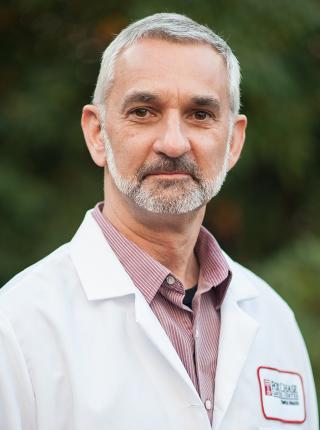
Roland Dunbrack, Jr. is a Professor and Co-Leader of the Cancer Signaling and Microenvironment Program at Fox Chase Cancer Center. He also serves as Director of both the Molecular Modeling Facility and the Organic Synthesis Facility. He holds adjunct professorships at the University of Pennsylvania School of Medicine and Drexel University College of Medicine, reflecting his broad academic engagement.
His research lies at the core of computational structural biology and bioinformatics, focusing on protein structure prediction, statistical analysis of protein conformations, and the development of software tools such as SCWRL, MolIDE, and BioAssemblyModeler. His work integrates Bayesian statistics, machine learning, and computational geometry to improve the accuracy of protein modeling and to apply these methods to cancer biology, DNA repair, and antibody design. He maintains several widely used public databases, including the backbone-dependent rotamer library and ProtCID.
The analysis of his recent publications reveals a sustained focus on protein structure and function, with significant contributions to understanding kinase conformations, biological assemblies, antibody CDR loops, and the structural basis of disease mutations. His work increasingly bridges computational methods with clinical applications in precision medicine, particularly in cancer.
- Health Equity & Social Justice Award (2024)
Dr. Dunbrack leads a research group that includes graduate students and postdoctoral researchers, and he actively collaborates with experimentalists across Fox Chase and beyond. His lab has been involved in major community efforts such as CASP and CAGI, assessing the state of the art in protein and genome structure prediction. He has directed the NCI-supported Molecular Modeling Facility since 2003, providing critical resources to cancer researchers.
His lab, the Dunbrack Lab, is dedicated to advancing structural bioinformatics through method development, software engineering, and collaborative science. The team works on large-scale analyses of the Protein Data Bank, develops user-friendly graphical interfaces for modeling, and applies computational insights to problems in cancer signaling and microenvironment.
حوزههای پژوهشی