معرفی
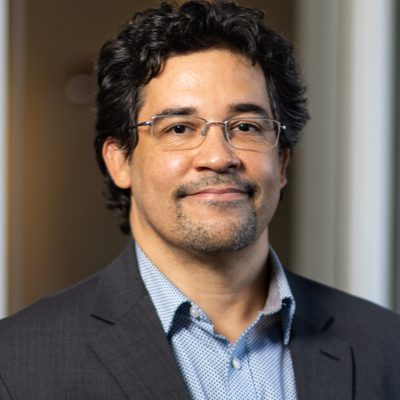
Dr. Rodrigo Serrão is an Assistant Professor of Sociology at Hope College's Department of Sociology and Social Work. His research intersects Race and Ethnicity, Immigration Studies, and Sociology of Religion, with a focus on Latinx identity, colorblind racism, and transnational religious dynamics. He has taught courses including Introduction to Sociology, Senior Seminar, and Sociology of Religion.
- Ph.D. in Sociology, University of South Florida (2020)
- Graduate Certificate in Latin American and Caribbean Studies, University of South Florida (2016)
- M.A. in Sociology, Universidade Federal da Paraiba, Brazil (2014)
- M.Div. in Theology, Baylor University (2008)
- B.A. in Biblical/Theological Studies, Baptist University of the Americas (2005)
- B.S. in Accountancy, Universidade Federal da Paraiba, Brazil (2001)
Dr. Serrão's research examines how Latinx students navigate racial identity in historically white colleges, regional prejudices in Brazil (e.g., Nordestinos), and religious responses to crises like the pandemic. His work often employs critical race theory and intersectional frameworks to analyze power structures.
Recent publications address ethical AI, Latinx racial identity, and Brazilian immigrant congregations. His scholarship appears in Latin American Perspectives, Sociology of Religion, and Review of Religious Research, with a forthcoming Keith Roberts Teaching Innovations Award (2019) and multiple grants (e.g., Religious Research Association, 2018).
- Frost Center Fellowship (2023–2024)
- Cultural Champion Award, Hope College (2022)
- Faculty Award, Latino Student Organization (2022)
- Winner, Society for the Study of Social Problems Graduate Paper Competition (2019)
- Constant H. Jacquet Research Award (2018)
Dr. Serrão co-hosts the podcast Conexão.edu, which explores education from Brazilian expatriates' perspectives. He emphasizes student-centered pedagogy, using Universal Design for Learning to foster inclusive classrooms where topics like privilege walks and cultural photography activities bridge theory with lived experiences.