معرفی
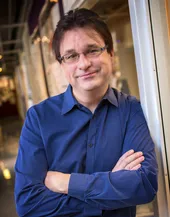
Dr. Robyn Schofield is an Associate Professor in Atmospheric Chemistry at the University of Melbourne's School of Geography, Earth and Atmospheric Sciences, where she also serves as Associate Dean of Environment and Sustainability. As an atmospheric chemist and aerosol scientist, her research spans urban air quality, indoor airborne transmission, ozone processes, aerosols and climate interactions, and polar atmospheric chemistry.
Her educational background includes a PhD from the University of Auckland (jointly with the National Institute of Water and Atmospheric Research at Lauder, New Zealand), where she studied the vertical distribution of BrO using spectroscopic measurements in Antarctica. She completed postdoctoral work at NOAA's Chemical Sciences Division in Boulder, Colorado, and held research fellowships at the Alfred Wegener Institute in Potsdam, Germany, including a Humboldt Fellowship and a prestigious Marie Curie Fellowship.
Dr. Schofield's research interests focus on spectroscopic observations of trace gases, radiative transfer modeling, stratospheric ozone loss kinetics, tropical tropopause layer processes, microphysical modeling, coupled chemistry-climate modeling, urban air quality and health impacts, and airborne transmission of pathogens. Her work bridges fundamental atmospheric science with practical applications for environmental and public health.
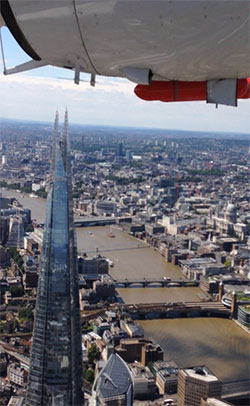
Her recent publications demonstrate a strong focus on air quality monitoring, aerosol characterization, climate impacts, and airborne disease transmission. The research spans diverse geographical locations from urban Australia to polar regions and the Great Barrier Reef, employing advanced measurement techniques including lidar, MAX-DOAS, drone-based systems, and sophisticated modeling approaches.
- Marie Curie Fellowship (2007)
- Fellow of the Humboldt Foundation (2006)
Dr. Schofield has supervised 9 PhD completions and currently mentors one doctoral student. She manages the AIRBOX facility, a collaborative research infrastructure for atmospheric studies, and serves as an Associate Investigator for the Centre of Excellence for Climate Extremes. She chairs the Australian Meteorology and Oceanographic Society's expert group on Atmospheric and Oceanic Composition and leads multiple active research projects including the ARC Training Centre for Advanced Building Systems Against Airborne Infection Transmission.
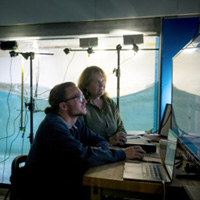
Her laboratory and research team work spans multiple platforms including research vessels (RSV Aurora Australis, RV Investigator), field campaigns across polar and tropical regions, and advanced atmospheric monitoring facilities. Current projects focus on airborne infection control, satellite impacts on ozone, Southern Ocean aerosols, methane remote sensing, and rock art monitoring in Murujuga.