معرفی
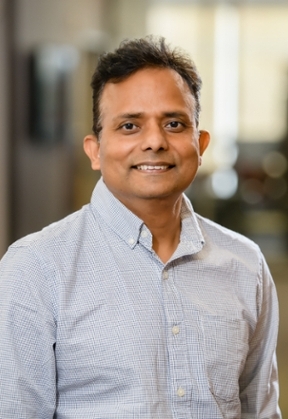
Robin Strässer is a Research Associate at the Institute for Systems Theory and Control Engineering at the University of Stuttgart, where he has been working since October 2020. His research focuses on data-based control methods, particularly using the Koopman operator to derive closed-loop control guarantees for nonlinear systems based on measured data. He is also actively involved in developing an autonomous e-scooter project aimed at reducing the university's CO2 emissions and promoting sustainable urban mobility.
His research interests span across data-driven control theory, nonlinear systems analysis, and autonomous vehicle systems. Strässer has made significant contributions to the application of Koopman operator theory in control systems, developing methods that provide stability guarantees for nonlinear systems. His work bridges theoretical control concepts with practical applications in sustainable transportation. He has also explored novel applications of control theory in unexpected domains, such as the analysis of cryptosystems using Koopman operator methods.
Analysis of his publications reveals a strong focus on the Koopman operator framework for data-driven control, with particular emphasis on stability guarantees and error bounds. His work demonstrates a progression from theoretical foundations to practical implementations, especially in autonomous vehicle systems. The research shows increasing interdisciplinary connections, linking control theory with sustainable transportation, chemical engineering, and even cryptography.
Among his notable achievements are the Best Paper Award at the European Robotics Forum (ERF2025) and the Best Poster Award at the International Conference on Data-Integrated Simulation Science (SimTech2023).
Strässer has been actively involved in teaching, having organized and supervised practical courses in control engineering and taught courses on system dynamics fundamentals and data-driven control. He has also completed a research stay at EPFL's Data-Driven Modelling and Control Group, further expanding his expertise in data-driven control methods.
His current work includes leading the autonomous e-scooter project at the University of Stuttgart, which serves as both a research platform for advanced control algorithms and a practical solution for sustainable campus transportation.