معرفی
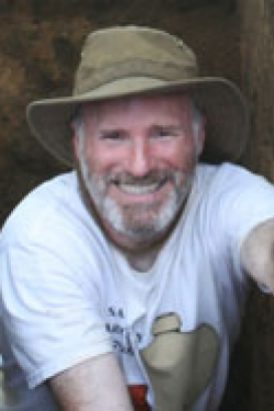
Robin Beck is Professor of Anthropology at the University of Michigan and curator of Eastern North American Archaeology at the Museum of Anthropological Archaeology. His work bridges archaeological fieldwork in eastern North America and the Andes, focusing on colonial encounters and societal transformations.
Education:
- Ph.D. in Anthropology, Northwestern University (2004)
Research centers on the archaeology of complex societies in eastern North America and the Andes (Bolivia/Peru), with emphasis on early colonial encounters in the southern United States and theoretical frameworks for social change. His dissertation excavated a Middle Formative ritual platform at Alto Pukara (Bolivia), applying Lévi-Strauss' social house concept to public space transformations. Since 2001, he co-directs the NSF-funded Exploring Joara Project at the Berry site (North Carolina), investigating Fort San Juan—the earliest European interior settlement in the present-day U.S.—to illuminate foundational colonial dynamics.
Publication trends reveal consistent focus on material culture as evidence of cultural negotiation, with recent work analyzing object assemblages in colonial contexts and theoretical implications of mixed material practices.
Scientific Awards:
- Field Discovery Award (Shanghai Archaeology Forum, 2019)
- Henry Russel Award, University of Michigan (2017)
- C B Moore Award for Excellence in Archaeology (2006)
Beck directs NSF-supported research at the Berry site, examining 16th-century Spanish-Native interactions through archaeological evidence. His grant work has redefined understanding of early colonialism's material dimensions. While specific advisees aren't listed, he mentors students through courses like ANTHRARC 181 (Discovering Archaeology) and ANTHRARC 281 (Materials and Culture).
As curator of Eastern North American Archaeology, he oversees collections at the Museum of Anthropological Archaeology and co-leads the long-term Exploring Joara Project field initiative in North Carolina.