معرفی
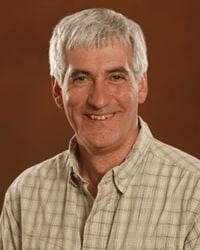
Robert Stelzer is a Professor and Graduate Coordinator in the Department of Biology at the University of Wisconsin Oshkosh. His research focuses on freshwater ecosystem dynamics, particularly in Wisconsin's sand plains streams and lakes, with an emphasis on biogeochemical processes and food web interactions.
His academic background includes:
- Postdoctoral Associate, Institute of Ecosystem Studies (2000-2001)
- Ph.D. in Ecology, University of Notre Dame (2000)
- M.S. in Zoology, Michigan State University (1992)
- B.S. in Biology, Rockhurst College (1988)
Dr. Stelzer's research centers on biogeochemistry and food web dynamics in streams and lakes, with key investigations into nitrogen processing, ecological stoichiometry, and nutrient-species interactions. His current work addresses emerging threats including microplastics in freshwater food webs and predicting Harmful Algal Blooms. His methodology combines long-term field experiments with collaborative student research, often spanning multiple spatial and temporal scales.
Analysis of his 15 most recent publications (2011-2022) reveals consistent focus on Wisconsin sand plains ecosystems, with evolving emphasis from foundational nutrient cycling studies toward contemporary environmental challenges like microplastics and thermal impacts. His work bridges fundamental ecological theory with applied management, particularly in Lake Winnebago and groundwater-dependent trout streams.
Dr. Stelzer actively mentors students, as evidenced by numerous student co-authors across his publications. He serves as Graduate Coordinator for the Biology program and encourages undergraduate/graduate research participation in his lab. His collaborative approach extends to conservation partnerships with nonprofit agencies, enhancing real-world application of freshwater science.
The Stelzer Lab operates through field studies in Wisconsin's unique sand plains ecosystems and laboratory analyses, maintaining long-term research sites that track ecological changes across decades. Current projects focus on microplastic contamination pathways and predictive models for algal blooms in regional lakes.