معرفی
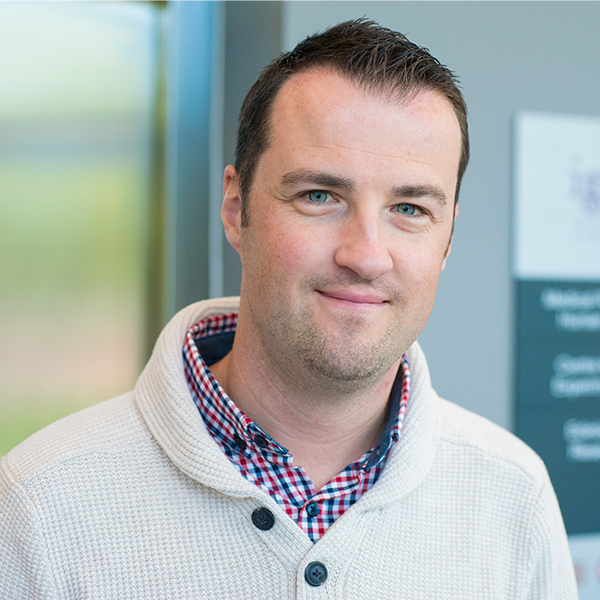
Professor Robert Insall is a Professor of Computational Cell Biology in the Cell & Developmental Biology department at University College London's Faculty of Biosciences. Previously, he held professorships at the University of Glasgow and the Cancer Research UK Beatson Institute in Glasgow. His career began with postdoctoral work at Johns Hopkins Hospital, followed by a Wellcome Trust Career Development fellowship at the LMCB.
Professor Insall's research spans chemotaxis, computational modeling of cell migration, the Scar/WAVE complex, and increasingly machine learning applications in cell biology. His lab investigates diverse cell types including chemotactic cancers (melanoma, pancreatic ductal adenocarcinoma, glioblastoma), immune cells (neutrophils, macrophages, dendritic cells), unusual parasites (Entamoeba, Trypanosomes), and Dictyostelium. His work combines experimental microscopy with mathematical modeling to understand how cells navigate chemical gradients.
His recent publications demonstrate a trajectory from fundamental cell biology toward increasingly sophisticated computational approaches, with his 2025 paper on Triple Deep Network Training for histopathology representing the latest integration of advanced AI techniques into his research program. Professor Insall serves on editorial boards for PLOS Biology and Current Biology, and has held positions on equipment panels for the Medical Research Council.
Professor Insall teaches across multiple levels of the biosciences curriculum at UCL, including modules on Research Skills for Bioscientists, Advanced Molecular Cell Biology, Cytoskeleton & Cell Motility, and Computational Cell Biophysics. His teaching interests focus on first and second year cell biology (mitosis, migration, vesicle trafficking) and mathematical/computational biology.
His lab, the Insall Lab, operates with a philosophy that encourages students to drive their own research agendas, resulting in former mentees pursuing diverse careers from academia to patent law and medical consulting. This approach has fostered a dynamic research environment that continuously evolves as new research directions emerge.