معرفی
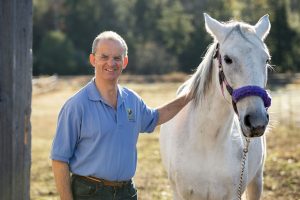
Robert Causey is an Associate Professor in the Department of Animal and Veterinary Sciences at the University of Maine, affiliated with the School of Food and Agriculture. He holds a Ph.D. (1995, Louisiana State University) and a DVM (1989, University of Minnesota). His professional interests span equine reproduction, infectious diseases, anatomy, biomechanics, and the economic sustainability of Maine's equine farms. Contact him via email: rcausey@maine.edu or phone: (207) 922-7475. His office is located at 207 Rogers Hall.
Education:
- Ph.D., 1995, Louisiana State University
- DVM, 1989, University of Minnesota
Research Interests: Dr. Causey focuses on equine reproductive health, infectious disease management, anatomical and biomechanical studies in horses, and sustainable practices for equine farms in Maine. His work integrates clinical veterinary practices with molecular and biochemical research, often involving wildlife (e.g., American black bears) and equine pathology. He collaborates with multidisciplinary teams to address practical farm challenges and biomedical innovations.
Teaching: He instructs courses including AVS 196 (Introduction to Equine Cooperative), AVS 303 (Equine Management Cooperative), AVS 393 (Training the Standardbred Horse), and AVS 397 (Equine Internship). These courses emphasize hands-on learning at the Witter Center Horse Barn and include modules on equine reproduction, anatomy, and farm management.
Advising & Grants: Dr. Causey advises students on pre-veterinary pathways, including the FEEPASS program at Glasgow University. He also oversees student research projects and is involved in protocol development (e.g., ELISA and PCR methods). No grants are explicitly mentioned in the provided texts.
Labs/Teams: He is closely tied to the Witter Center Horse Barn, where students participate in chores and safety training. The barn serves as a teaching facility for courses like AVS 196/303/397, focusing on equine care, anatomy, and emergency management. He co-authored lab manuals and safety protocols with students, highlighting collaborative efforts.