معرفی
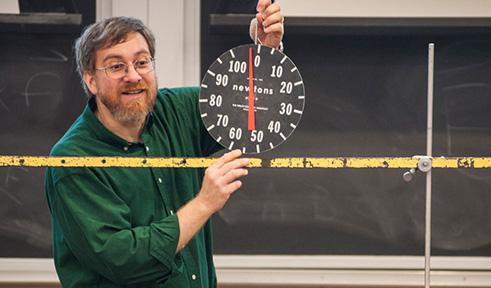
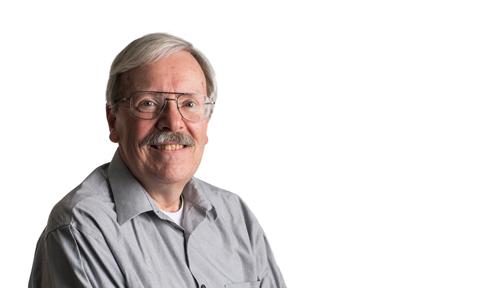
Richard Piccard is an Adjunct Associate Professor in the Department of Physics and Astronomy at Ohio University's College of Arts and Sciences. He teaches undergraduate physics courses on a part-time basis and maintains an active presence in curriculum development and student engagement.
- University: Ohio University
- School: College of Arts and Sciences
- Department: Department of Physics and Astronomy
- Academic Rank: Adjunct Associate Professor
- Status: Part-time faculty
His research and teaching interests center on thermodynamics, entropy, and the societal implications of energy use. He has developed and taught an interdisciplinary Tier III course, 'Entropy and Human Activity,' which critically examines the role of entropy in human civilization, drawing from physics, ethics, economics, and environmental science. His educational background includes a Ph.D. in Physics from Princeton University (1979), an M.S. in Education from the University of Pennsylvania (1972), and a B.S. in Physics from the California Institute of Technology (1970).
Dr. Piccard's recent teaching includes Physics 2001 and Physics 2002, non-calculus introductory physics courses, most recently offered in the Spring 2025 and Fall 2024 semesters, respectively. He emphasizes accessible science education and has created extensive online course materials, including lecture notes on entropy, radiation, and technical writing. His pedagogical approach integrates ethical and philosophical dimensions into scientific inquiry, encouraging students to reflect on the broader implications of scientific principles.
He is a member of several prestigious professional organizations:
- American Association of Physics Teachers (AAPT)
- American Association for the Advancement of Science (AAAS)
- Institute of Electrical and Electronic Engineers (IEEE)
- Sigma Xi, The Scientific Research Society
Dr. Piccard advises students on term papers, oral presentations, and technical writing, with a focus on clarity, critical thinking, and academic integrity. He does not appear to lead a formal research lab or team, but his curriculum development and course materials reflect a sustained scholarly commitment to physics education and interdisciplinary learning. His office is located in Clippinger Laboratories, and he provides detailed accessibility instructions for students, demonstrating a strong commitment to inclusive education.