معرفی
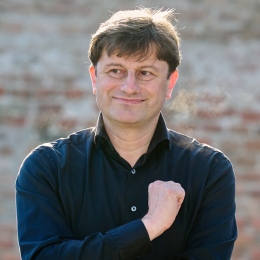
Richard Dawid is Professor of Philosophy of Science at Stockholm University's Department of Philosophy. He holds a PhD in theoretical physics from the University of Vienna and transitioned from physics to philosophy in 2000. Before joining Stockholm University in 2016, he worked as a philosopher of science at the University of Vienna and the MCMP Munich after previously working as a physicist at TU Munich and the Lawrence Berkeley Laboratory.
Dawid earned his PhD in theoretical physics from the University of Vienna, which established the foundation for his unique interdisciplinary approach. His educational background bridges the physical sciences and philosophy, creating a distinctive perspective on fundamental physics questions.
Dawid's research focuses on philosophical aspects of contemporary theories in high energy physics and cosmology. He is renowned for developing the concept of non-empirical theory confirmation, detailed in his book "String Theory and the Scientific Method" (Cambridge University Press, 2013). His work spans Everettian quantum mechanics, data analysis in high energy physics, string dualities, cosmological multiverse, anthropic reasoning, Bayesian confirmation theory, and scientific realism debates. He approaches these topics with a methodology that challenges traditional boundaries between empirical and non-empirical reasoning in science.
Analysis of Dawid's recent publications reveals a consistent focus on meta-empirical theory assessment across diverse domains of fundamental physics. His work increasingly explores the philosophical implications of quantum mechanics interpretations, particularly the Everettian (many-worlds) approach, and examines the boundaries of scientific methodology where empirical testing faces significant constraints. There's a clear trajectory toward integrating historical perspectives with contemporary philosophical analysis of physics, demonstrating how past scientific developments inform current theoretical challenges.
Dawid currently leads a VR-funded (Swedish Research Council) research project on the philosophy of cosmology. His ongoing projects "Non-empirical Theory Confirmation in Fundamental Physics" and "Theory succession and finality claims in fundamental physics" investigate the significance of non-empirical reasoning in fundamental physics and explore claims about final theories in contemporary physics. These projects examine how theoretical virtues and meta-empirical considerations can provide significant support for theories even in the absence of direct empirical evidence, particularly in contexts like string theory and cosmology where experimental verification remains challenging.