معرفی
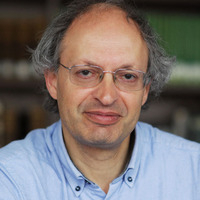
Riccardo Contini is Full Professor of Semitic Philology at the University of Naples "L'Orientale", where he has held a permanent chair since January 2004. Previously he taught at Ca’ Foscari University of Venice, the University of Rome "La Sapienza" and the Scuola Normale Superiore, Pisa, steadily advancing from Tenured Research Fellow to Full Professor.
Education
- Laurea (M.A.) in Semitic Philology, University of Pisa & Scuola Normale Superiore, November 1978
- Graduate study periods: UCLA (Los Angeles), Pontifical Biblical Institute (Rome), École Pratique des Hautes Études IVe Section (Paris)
Research Interests
Professor Contini’s work centres on the linguistic history of the Semitic-speaking Near East. Key foci include comparative Semitic morphosyntax, Hebrew linguistics, Aramaic and Arabic dialectology, and the Syriac linguistic and historiographical tradition. He also pursues ethnolinguistic fieldwork in Yemen and Oman, producing data on living Arabic and Aramaic varieties.
Across his publications he repeatedly combines philological precision with broader historical questions, ranging from Persian-period Jewish communities to medieval Syriac chronicles and 19th-century travellers’ records of Arabian speech.
Scientific Awards
- 2007 Tartufari Prize for Semitics, Accademia Nazionale dei Lincei – Italy’s most prestigious national recognition in the field.
Editorial & Institutional Roles
- Chair, Center for Jewish Studies, University of Naples "L'Orientale" (since 2009)
- Editor, Testi del Vicino Oriente Antico series, Paideia Editrice (since 2006)
- Former Co-editor, Syriac section, History of Science, Istituto dell’Enciclopedia Italiana (2000-2001)
- Member, Advisory Board, Studi e Materiali di Storia delle Religioni (since 2009)
- Former editorial board member, Annali dell’Istituto Orientale di Napoli – sez. Orientale (2003-2009)
Research Funding
His investigations have been supported by competitive grants from the University of Naples "L'Orientale" and the Italian Ministry of University.
Laboratory & Fieldwork
Field trips to Yemen and Oman underpin his ethnolinguistic analyses of contemporary Arabic and Neo-Aramaic dialects, feeding comparative data into his historical-linguistic reconstructions.