معرفی
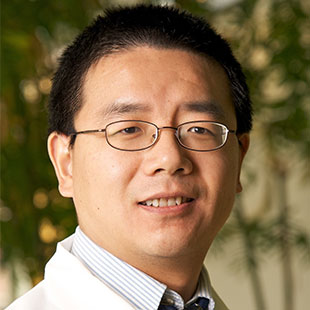
Rendong Yang is an Associate Professor in the Department of Urology at Northwestern University's Feinberg School of Medicine, where he leads the Yang Lab focused on computational analysis of disease mechanisms. His research integrates large-scale genomic and transcriptomic datasets to understand cancer initiation and progression.
His educational background includes a BS (2006) and PhD (2011) from China Agricultural University, followed by postdoctoral training in Bioinformatics at Emory University (2014).
- BS: China Agricultural University (2006)
- PhD: China Agricultural University (2011)
- Postdoctoral Fellow: Emory University, Bioinformatics (2014)
Dr. Yang's research centers on four key areas: detection of genomic alterations using high-throughput sequencing, discovery of transcriptomic mis-splicing events, understanding lncRNA biology in disease contexts, and identifying tumor neoantigens for immunotherapy. His lab develops computational methods for analyzing multidimensional omics data, with particular emphasis on second and third-generation sequencing technologies to elucidate genetic mechanisms of human diseases, especially cancer.
His recent publications (2025) demonstrate strong focus on prostate cancer genomics, computational benchmarking, and molecular mechanisms involving lncRNAs and signaling pathways. The work spans technique-driven algorithm development and hypothesis-driven biological investigations, with applications in cancer diagnostics and therapeutics.
Key scientific recognitions include:
- Maximizing Investigators’ Research Award, National Institute of General Medical Sciences (2021)
- Young Investigator Award, Prostate Cancer Foundation (2015)
Dr. Yang serves on editorial boards for Genes (2024-present) and PeerJ (2024-present), and is an active member of professional societies including the RNA Society, International Society for Computational Biology, and Society for Basic Urologic Research. His industry relationships include consulting activities with Tempus Labs. He is affiliated with the Robert H. Lurie Comprehensive Cancer Center and Simpson Querrey Institute for Epigenetics.
The Yang Lab maintains active research in computational genomics, with ongoing projects analyzing genetic and transcriptomic alterations to develop precision medicine approaches for cancer treatment. The lab's work bridges algorithm development with biological discovery to address critical gaps in understanding disease mechanisms.