معرفی
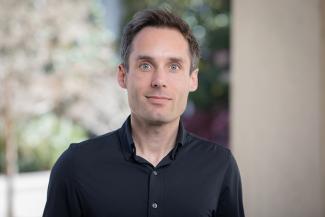
Remco Godfried Theo Zegers is a Professor in the Department of Physics & Astronomy at Michigan State University (MSU), where he has been since 2003. He is also a Research Professor at the Facility for Rare Isotope Beams (FRIB) and serves as the scientific spokesperson for the FRIB High Rigidity Spectrometer. Additionally, he holds the position of Associate Director for the FRIB Office for Education, Workforce, and Career Development, supporting students and postdoctoral researchers.
Education:
- PhD in Mathematics and Natural Sciences, State University of Groningen (1999)
- MS in Technical Physics, State University of Groningen (1995)
His research focuses on experimental nuclear astrophysics, particularly charge-exchange reactions to study electron capture, beta decay, and neutrino interactions in environments such as supernovae and neutron stars. These experiments are conducted using fast beams of rare isotopes and advanced detector systems like the Low Energy Neutron Detector Array (LENDA) and Segmented Germanium Array (SeGA), coupled with the S800 magnetic spectrograph. His work bridges nuclear physics, astrophysics, and neutrino physics, with applications in understanding stellar explosions and element formation.
His publications highlight advancements in experimental techniques (e.g., inverse kinematics), Gamow-Teller transition analysis, and the study of giant resonances. These studies often involve collaborations with national laboratories (e.g., Argonne, Lawrence Berkeley) and international institutions in Europe, Japan, and Canada.
Scientific Awards:
- Fellow of the American Physical Society (2017)
- Fellow of the American Association for the Advancement of Science (AAAS)
His research is supported by the US National Science Foundation (NSF) and the US Department of Energy (DOE), with grants from the Office of Nuclear Physics. He actively mentors students, involving them in experiments, detector development, and astrophysical simulations.
He leads the charge-exchange research group at NSCL/FRIB and plays a pivotal role in developing the FRIB High Rigidity Spectrometer (HRS), which enables studies of very neutron-rich nuclei. His work spans collaborations with institutions like the Research Center for Nuclear Physics (RCNP) in Japan and detector projects such as GRETINA and Active Target Time Projection Chamber.