معرفی
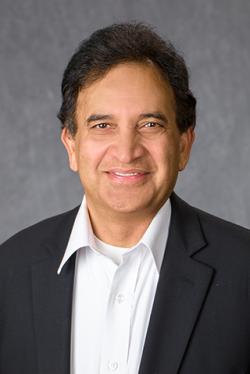
Dr. Reddy Palli serves as Chair of Entomology and Interim Chair of Plant Pathology at the University of Kentucky's Martin-Gatton College of Agriculture, Food and Environment. His office is located in S-225 Ag. Science North in Lexington, Kentucky. With an active research program evidenced by numerous 2025 publications, Dr. Palli maintains a prominent position in the field of molecular entomology.
Dr. Palli's research focuses on the molecular mechanisms underlying insect development, reproduction, and pest management strategies. His work particularly emphasizes RNA interference (RNAi) pathways in agricultural pests, epigenetic regulation of insect metamorphosis, and innovative approaches to pest control. His laboratory investigates how chromatin modifications, histone acetylation, and gene regulation influence critical processes like ecdysone signaling, spermatogenesis, and insecticide resistance.
Analysis of Dr. Palli's recent publications reveals a strong emphasis on RNAi-based pest management, with particular attention to delivery mechanisms, environmental factors affecting efficacy, and overcoming resistance. His research spans multiple model and pest systems including fall armyworm (Spodoptera frugiperda), potato tuberworm (Phthorimaea operculella), and Tribolium castaneum, with growing interest in mosquito vector biology. The interdisciplinary nature of his work bridges basic molecular mechanisms with practical agricultural applications.
Dr. Palli's laboratory appears to be highly productive, with numerous publications in 2025 covering topics from nanoparticle delivery systems for RNAi to fundamental studies of insect reproductive biology. His work on histone modifications, chromatin accessibility, and gene regulation during insect development represents a significant contribution to understanding the epigenetic control of metamorphosis and reproduction in insects.
Based on the volume and scope of recent publications, Dr. Palli likely supervises multiple graduate students and postdoctoral researchers, though specific names are not provided in the available information. His research program appears to be well-funded through grants supporting molecular entomology and innovative pest management approaches.