معرفی
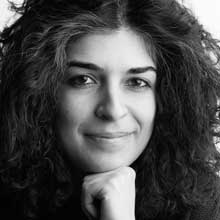
Rebecca Howard serves as an Assistant Professor of Art History and Coordinator of Graduate Studies at the University of Memphis. She holds a Ph.D. in Early Modern Art History from The Ohio State University (2017), where she was a Presidential Fellow, alongside an M.A. from Ohio State and a B.A. from Christopher Newport University (2008). Her research focuses on portraiture, expressions of identity, memory studies, early modern anatomical inquiry, word-image theory, and global cultural exchanges. She is currently editing her book Portraiture and Mnemonics in Renaissance Italy: Commemoration through Body and Brain, under contract with Amsterdam University Press. Her work often examines how Renaissance artists engaged with Egyptian symbolism, early modern garden designs, and the intersection of art with neuroscience.
Howard’s educational background includes a Bachelor of Arts in 2008, followed by a Master of Arts in 2011 and a Ph.D. in 2017, all from prestigious institutions. Her doctoral fellowship at Ohio State underscores her academic excellence.
Her research interests span diverse topics: the role of portraiture in memory preservation, the influence of ancient Egyptian art on Renaissance Italy, and the socio-cultural dimensions of early modern anatomical studies. She explores how physical spaces like gardens and designed landscapes function as mnemonic devices within Renaissance contexts. Her pedagogical work includes contributions to interdisciplinary teaching resources like Teaching Race in the European Renaissance.
Her publications consistently engage with themes of commemoration, cross-cultural interactions, and the body’s symbolic role in art. Recent works emphasize the interplay between Renaissance artistic practices and emerging scientific thought, particularly in anatomy and cognitive studies.
- Awards: Presidential Fellow at The Ohio State University
In her advisory role, Howard oversees graduate studies in the Department of Art and Design. While no specific grants are listed, her book project and pedagogical contributions reflect sustained academic engagement. She collaborates within the department’s scholarly community, contributing to its interdisciplinary research environment.
Though not explicitly stated, her work likely intersects with university research centers focusing on Renaissance studies or art history. Her research trajectory suggests a focus on integrating global cultural histories with material culture analysis.