معرفی
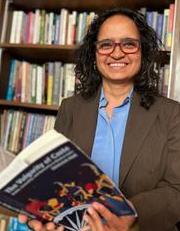
Prof. Dr. Rasika Ajotikar serves as Junior Professor of Ethnomusicology at the Institute for Music and Musicology and the Center for World Music at the University of Hildesheim. She holds a PhD in Ethnomusicology from SOAS University of London and has held postdoctoral positions at SOAS University of London as a British Academy Fellow (2021-2023) and at the University of Göttingen with the Berliner Phonogramm-Archiv (2017-2020).
Her research focuses on the political economy of music, with particular attention to caste, class, race, gender, and social movements in South Asia. Professor Ajotikar's work bridges ethnomusicology, anthropology, and critical theory, examining how music intersects with structures of power and resistance. She brings a unique perspective as both a scholar and performer trained in North Indian classical music tradition.
Her current scholarly work centers on anti-caste thought in western India, examining the relationship between caste and hereditary artisanship while analyzing how modernity has shaped movements by historically marginalized groups, particularly Dalits. She has conducted extensive ethnographic fieldwork among musicians and activists from anti-caste collectives in Maharashtra.
Professor Ajotikar has made significant contributions to sound archive studies, particularly through her work on the Felix van Lamsweerde collection, which resulted in the digitization of approximately eleven hundred items. She has also curated academic initiatives such as the 2022 online seminar series 'Culture and Aesthetics in Contemporary Capitalism.'
At the University of Hildesheim, she teaches courses including Music and Social Movements, Music, Race, Caste, Sound Archives, Modernity and Postcolonial India, and academic writing skills development. She also maintains an active artistic practice through her music project 'Tarannum,' featuring classical and modern forms of Urdu ghazal, and has collaborated extensively with anti-caste musical collectives in western India.