معرفی
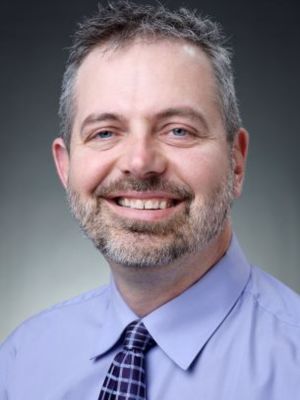
Rasa Platakyte is a Postdoctoral Fellow at Lund University's Centre for Environmental and Climate Science (CEC) and BECC: Biodiversity and Ecosystem services in a Changing Climate. Her research focuses on Arctic soil systems under climate change stressors, utilizing advanced spectroscopic and microscopic techniques to bridge organism-level responses with ecosystem-scale processes.
She earned her doctoral degree in Physics from Vilnius University, Lithuania, where her work centered on molecular structure analysis through low-temperature vibrational spectroscopy and quantum chemistry. Her doctoral research spanned diverse applications including food science, cultural heritage conservation, soil analysis, and biomedical materials.
Current research examines exacerbating freeze-thaw cycles in Arctic biological soil crusts from Disko Island, Greenland. Using Raman microspectroscopy combined with stable isotope probing and soil respiration measurements, she investigates microbial fitness and carbon cycling dynamics. Her work directly supports UN Sustainable Development Goals for Climate Action (SDG 13) and Life on Land (SDG 15), with fingerprint expertise in Biological Soil Crusts, Calcite formation, and Low-Temperature Engineering.
Her 2025 publication in ACS Applied Materials & Interfaces demonstrates interdisciplinary reach, applying nanoscale characterization of fungal-induced biomineralization to civil engineering challenges in self-healing concrete. This work exemplifies her cross-cutting methodology connecting environmental microbiology with materials science.
As a researcher on the Lund University project "Through scales: carbon cycling and microbial fitness under exacerbating freeze-thaw cycles in arctic biological soil crusts" (2023-2025), she collaborated with Principal Investigators M. Pucetaite and E. Hammer. She actively participates in BECC networks, presenting at the 2023 BECC Annual Meeting and 2024 Nordic Conference on Soil Science, while contributing to ClimBEco mentorship initiatives.
Her technical repertoire spans optical microscopy, Raman microspectroscopy, stable isotope analysis, and X-ray absorption techniques, operating within Lund's environmental research infrastructure focused on climate change impacts in vulnerable Arctic ecosystems.