معرفی
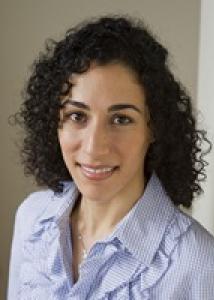
Rania Gihleb is an Associate Professor of Economics at the University of Pittsburgh and an IZA Research Affiliate. Her work focuses on labor economics, family economics, applied econometrics, and the economics of education. She holds a PhD in Economics from Boston University (2014), a Master’s in Economics from Tel Aviv University, and a BA in Economics from the Academic College of Tel Aviv Yafo.
Her research explores topics such as household dynamics, public policy impacts (e.g., school start times, cash transfers), labor market regulations (e.g., right-to-work laws), and vulnerable populations’ well-being during crises (e.g., mental health during the pandemic). Recent work also addresses automation’s effects on worker safety, immigrant self-employment patterns, and historical immigration waves’ influence on societal attitudes.
Her articles span disciplines including education policy, public health, and technology’s labor market impacts. She frequently examines how economic policies interact with social structures, particularly within family units and marginalized groups. Notable studies include analyses of undocumented immigrants’ living arrangements and the long-term effects of religious safety nets on human capital.
Gihleb’s work bridges theoretical economic frameworks with real-world policy applications, emphasizing empirical rigor through applied econometric methods. While no formal grants or labs are explicitly listed in the text, her affiliations with institutions like IZA suggest collaborative research networks in labor and family economics.