معرفی
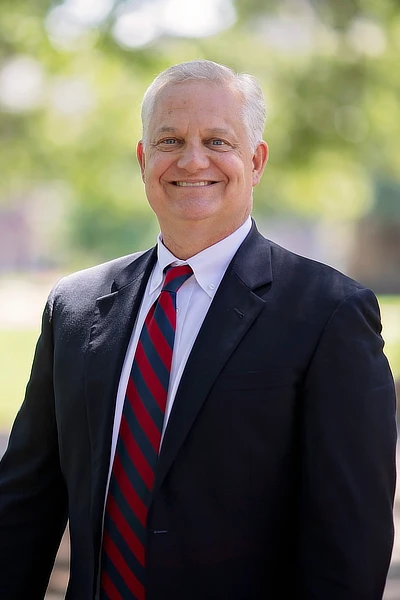
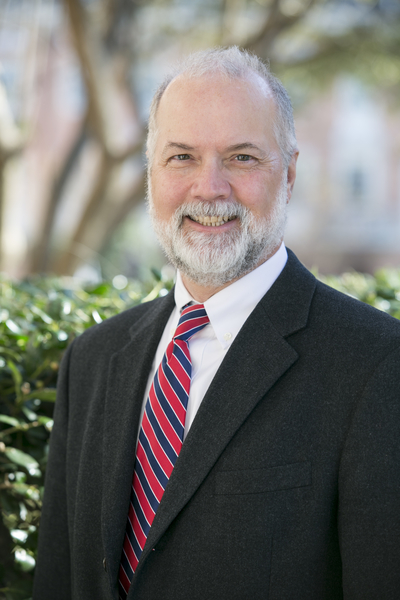
Randolph C. Horn serves as Professor of Political Science in Samford University's Howard College of Arts and Sciences and Assistant Vice President for Enrollment Research, applying statistical expertise to university strategy since 2010. His dual academic-administrative role bridges political science scholarship with data-driven institutional decision-making in recruitment, retention, and resource allocation.
Horn's educational background includes:
- BA in Political Science and International Studies, University of the South (1987)
- MA in Political Science, University of Florida (1990)
- PhD in Political Science, University of Florida (1993)
His research specializes in public opinion polling and political behavior, with sustained focus on Alabama's electoral politics, race relations, and policy landscapes through the annual PARCA Poll he has directed since 2007. Methodologically, he integrates GIS, spatial modeling, and Hierarchical Linear Modeling to analyze contextual influences on political behavior and organizational decision-making.
Horn's publication trajectory reveals consistent thematic concentration on Alabama's policy evolution, with annual surveys documenting shifting public priorities across education, fiscal policy, and constitutional reform. His co-authored legal scholarship on county government structures demonstrates interdisciplinary application of polling data to public administration challenges.
Horn's scholarly contributions have earned significant recognition:
- Governor’s Award for Distinguished Service to Alabama (2003)
- Ted Robinson Award for Best Paper on Minority Politics (1993)
- NSF-funded Fellow in Academic Excellence and GIS (AEGIS)
- Multiple Faculty Development Grants for methodological innovation
As an administrator, Horn has advised university leadership on space utilization, academic program review, and enrollment strategy while maintaining active civic engagement through the Alabama Political Science Association (where he served as president) and technical consultation for state commissions. His current work focuses on predictive modeling for institutional resilience and expanding PARCA's policy impact through stakeholder partnerships with education and civic organizations.