معرفی
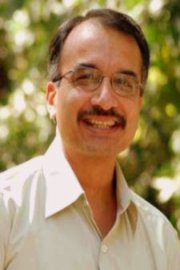
Dr. Ramaraj Ayyappan is an Assistant Professor in the Department of Chemistry at the Indian Institute of Science Education and Research (IISER), Thiruvananthapuram, appointed in August 2022. His research focuses on organometallic chemistry, specifically designing catalysts using first-row transition metals for sustainable applications including CO2 hydrogenation and bond activation.
His academic background includes:
- B.Sc Chemistry from Gandhigram Rural University, Chinnalapatti, Tamil Nadu
- Integrated Ph.D. from Indian Institute of Science (IISc), Bangalore (Thesis advisor: Prof Balaji R. Jagirdar)
- Postdoctoral research at LCC-CNRS, Toulouse, France
- Postdoctoral research at University of South Wales, Pontypridd, UK
Dr. Ayyappan's research centers on developing phosphine and carbene-based multifunctional ligands to tailor transition-metal complexes (Mn, Fe, Co, Ni, Cu, Ru, Ir, Rh) for catalytic applications. His group emphasizes earth-abundant first-row 3d metals for sustainable chemistry, overcoming challenges like labile metal-ligand bonds to achieve CO2 activation, hydrogenation, and coupling reactions. Current projects focus on CO2 and P4 activation using tailored metal complexes.
Analysis of his 11 publications (2014-2024) reveals consistent innovation in organometallic catalysis, with recent work (2022-2024) increasingly addressing sustainable CO2 functionalization and dinitrogen activation. His research demonstrates strategic ligand design to enable challenging transformations with abundant metals, reflecting a strong commitment to green chemistry solutions.
Dr. Ayyappan actively mentors students, currently supervising JRF Deepthy Devassy (SERB-SRG project), BS-MS students Aswin Das (SERB project JRF), Shwetha Jayarajan, and Fiza Fathima S, alongside interns from CHRIST University and other institutions. His group secured SERB funding and hosted the Inspire Fellow Anjali Suku. In early 2025, his students Deepthy, Fiza, and Shwetha won the best poster award at FSCHEM 25 symposium for their hydrogenation catalyst research.
The research laboratory features Schlenk lines, glove boxes, medium-pressure reaction systems (5-10 bar), Fischer-Porter and Parr hydrogenation apparatus, and comprehensive analytical capabilities (NMR, IR, X-ray, HRMS, GC-MS). Strict safety protocols govern handling of hazardous chemicals and gases (H2, CO2, NH3), with mandatory training in waste disposal, emergency procedures, and instrument maintenance.