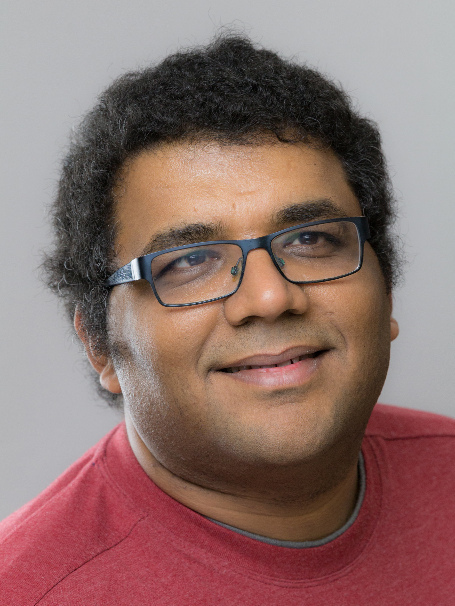
Raman Srivatsan
دانشیار · Biomolecular Folding & Interactions
University of Wisconsin-Madisonمعرفی
Raman Srivatsan is an Associate Professor in the Department of Bacteriology at the University of Wisconsin-Madison, with affiliate appointments in the Department of Chemical and Biological Engineering. He maintains additional affiliations with the Great Lakes Bioenergy Research Center and the Center for Genome Science Innovation, reflecting the interdisciplinary nature of his research program that bridges biochemistry, microbiology, computation, and engineering.
His educational background includes a B.S. from Baroda University in India, an M.S. from Missouri University of Science and Technology, a Ph.D. from the University of Washington, Seattle, and postdoctoral training at Harvard Medical School - Wyss Institute for Biologically-inspired Engineering.
Dr. Srivatsan's research program develops technologies at the intersection of multiple disciplines to understand and engineer biological systems at protein-wide and genome-wide scales. His laboratory takes a systems and synthetic biology approach, leveraging computational protein design, next-generation DNA synthesis and sequencing technologies, and highly multiplexed selection and screening assays. A common theme in his work is devising experimental screens to make thousands to millions of mutational perturbations and measurements in biological systems in single-pot experiments, which reveal functional landscapes, uncover non-intuitive sequence-function relationships, and train machine learning models for engineering new functions.
Analysis of his recent publication record shows a strong focus on bacteriophage engineering, protein allostery, and high-throughput approaches to understanding biological systems. His work combines deep mutational scanning with computational methods to address fundamental questions in biomolecular systems while maintaining close alignment with translational applications in areas like antibiotic resistance and microbiome engineering.
Dr. Srivatsan's research spans several interconnected areas including protein allostery (molecular rules and engineering biosensors), bacteriophage host interactions (understanding interactions, phage-based antibacterial therapies, precision microbiome editing), human disease variants, and emerging themes in transporters, gene delivery systems, and vaccine design. His laboratory's approach enables the development of programmable synthetic phages, novel allosteric biosensors, and precision tools for microbiome editing with significant potential for addressing antibiotic resistance and other biomedical challenges.