معرفی
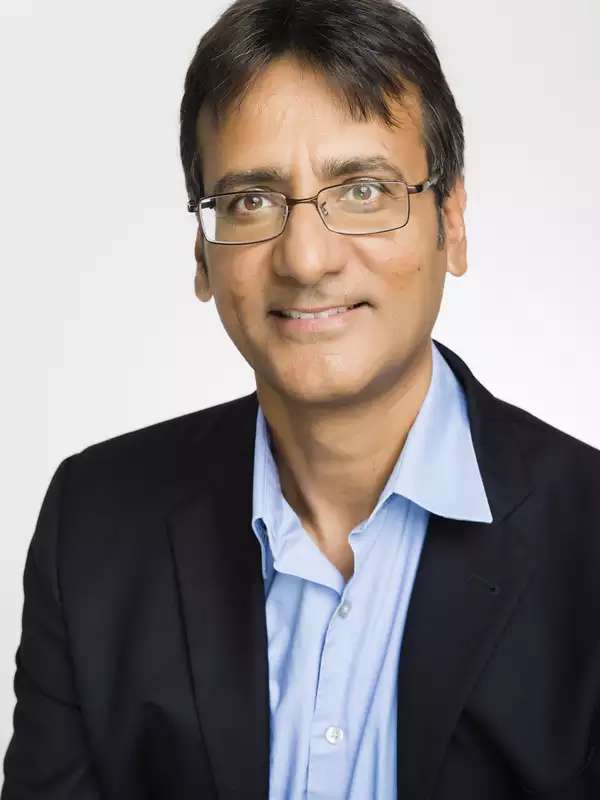
Rajiv Sethi is a Professor of Economics at Barnard College, Columbia University and an External Professor at the Santa Fe Institute. He was a 2020-21 Joy Foundation Fellow at the Harvard Radcliffe Institute and a 2008-09 Richard B. Fisher Member at the Institute for Advanced Study in Princeton. He serves on the editorial boards of several journals, including the American Economic Review, and is a founding associate editor of Collective Intelligence.
His research focuses on information and beliefs, with particular emphasis on how stereotypes affect interactions in the criminal justice system. In collaboration with Brendan O'Flaherty, he has examined the manner in which stereotypes affect interactions among strangers, especially in relation to crime and the criminal justice system. Their book, "Shadows of Doubt: Stereotypes, Crime, and the Pursuit of Justice" was published by Harvard University Press in 2019.
With Muhamet Yildiz, he has explored communication among individuals who consider each other to have valuable information but believe others are biased in processing information. His work analyzes the trade-off between seeking information from well-informed versus well-understood sources, examining public disagreement and private information flows.
Rajiv Sethi is also a contributor to CORE (Curriculum Open-Access Resources for Economics), an initiative producing high-quality resources for teaching economics worldwide under a Creative Commons license.
His recent publications span diverse topics including stereotypes and policing, harmful discrimination in criminal justice, meritocracy and representation, leverage dynamics, and hybrid forecasting of geopolitical events. These works demonstrate his interdisciplinary approach combining economics, criminology, and social psychology.
- Joy Foundation Fellow at the Harvard Radcliffe Institute (2020-21)
- Richard B. Fisher Member at the Institute for Advanced Study in Princeton (2008-09)
Professor Sethi has advised numerous students and collaborated extensively with researchers like Brendan O'Flaherty and Muhamet Yildiz. His research has been supported by prestigious fellowships and has significant implications for policy in criminal justice and economic inequality.
He maintains an active research agenda focusing on the geography of lethal force, examining why geographic variations in scale and racial disparities in police use of deadly force exist and identifying effective policy remedies.