معرفی
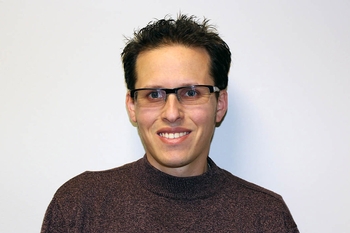
Rachel Smallman is an Associate Professor in the Department of Psychology at Texas A&M University. Her research focuses on counterfactual thinking—thoughts of 'what might have been'—and its implications for decision-making, mental health, and applied domains like engineering and public health. She explores both the functional (e.g., learning from mistakes) and dysfunctional (e.g., regret) aspects of counterfactuals, with interdisciplinary connections to neuroscience, behavioral economics, and cross-cultural studies. Her work has been published in prestigious journals such as Journal of Personality and Social Psychology and Personality and Social Psychology Bulletin.
Smallman’s research integrates experimental methods from social and cognitive psychology with applied contexts, including health behavior change interventions and decision-making in engineering. She collaborates with colleagues across disciplines, evidenced by her work on serious gaming for studying engineering decisions and neural correlates of counterfactual thinking. Her lab website highlights ongoing projects examining the role of affective states, cultural differences, and individual differences (e.g., narcissism, optimism) in shaping counterfactual processes.
Recent studies include interventions targeting alcohol harm reduction, dietary intentions, and workplace safety through counterfactual-based approaches. She is actively mentoring students and accepting graduate applicants for 2024–2025, reflecting her commitment to training future researchers in decision science and social cognition.