معرفی
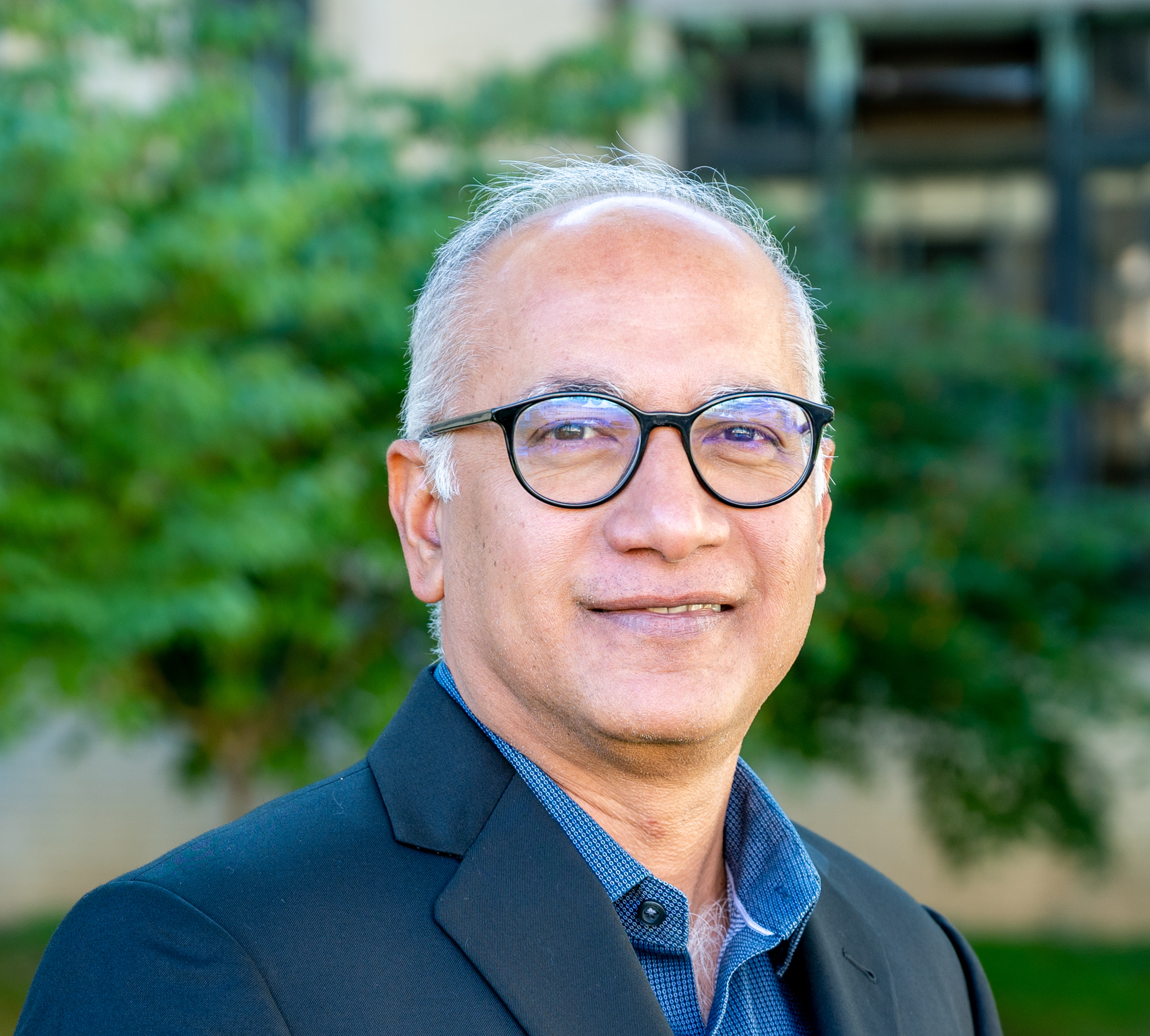
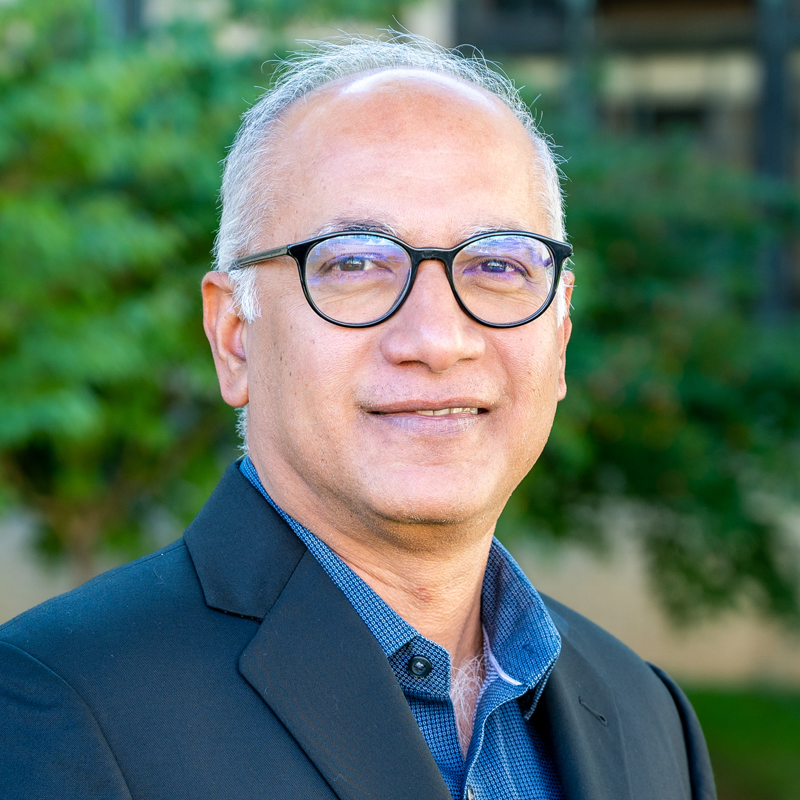
Prasad Tetali is the Alexander M. Knaster Professor and Department Head of the Department of Mathematical Sciences at Carnegie Mellon University (CMU), located in Pittsburgh, PA. He also holds adjunct professorships at Emory University (Math/CS) and the Georgia Institute of Technology (Math/CoC). His academic journey includes a Ph.D. from the Courant Institute of Mathematical Sciences, NYU, and postdoctoral research at AT&T Bell Labs.
Education:
- Ph.D. (1991), Courant Institute of Mathematical Sciences, NYU
- M.S. (1987), Indian Institute of Science, Bangalore, India
- Postdoctoral Appointments: Mathematical Sciences Research Center, AT&T Bell Labs
Research Interests: Dr. Tetali's work focuses on Discrete Mathematics, Probability Theory, and Theoretical Computing. Key areas include Markov chains, isoperimetry, combinatorics, computational number theory, and algorithm design. His contributions span foundational theory and applications in optimization, statistical physics, and network analysis.
Publications & Trends: His research has led to influential papers on topics like mixing times of Markov chains, entropy inequalities, and combinatorial optimization. Notable works include foundational studies on the Potts model, the Swendsen-Wang algorithm, and sharp threshold phenomena in number theory.
Awards & Recognition:
- AAAS Fellow
- SIAM Fellow (Inaugural Class, 2009)
- Fellow of the American Mathematical Society
- AMS Fellow (Inaugural Class, 2012)
- Georgia Tech’s Regents Professor
Advising & Grants: Dr. Tetali has mentored 11 PhD students and numerous postdocs. His grants include leadership roles in initiatives such as the SIAM Activity Group on Discrete Mathematics and the ACO PhD Program at Georgia Tech. He has also held editorial roles at top journals like SIAM Journal on Discrete Mathematics and Random Structures & Algorithms.
Labs & Collaborations: His work often intersects with interdisciplinary teams, including contributions to distributed algorithms, network science, and computational mathematics. He actively collaborates with researchers in computer science, physics, and applied mathematics.