
معرفی
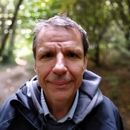
PD Dr. Philipp André Maas serves as a research associate at the Institute of Indology and Central Asian Studies, University of Leipzig, working on the German Research Foundation (DFG)-funded project "Digital Edition of the Nyāyabhāṣya" since July 2016. Previously, he was a university assistant at the Institute for South Asian, Tibetan, and Buddhist Studies at the University of Vienna (2010-2016) and conducted post-doctoral research on "Philosophy and Medicine in Early Classical India" at various institutions in Vienna and Bonn.
Dr. Maas specializes in the cultural, philosophical, and religious history of South Asia from ancient times to the early modern period. His research methodology combines comparative religious and literary studies with philological and historical approaches, utilizing primary sources in Vedic, Sanskrit, Prakrit, Pali, Classical Tibetan, and Hindi. He has developed innovative interdisciplinary methods by integrating Digital Humanities and evolutionary biology with classical philology to study the textual genealogy of ancient Indian works.
His scholarly work demonstrates a consistent focus on Indian philosophical traditions, particularly Nyāya philosophy, Sāṅkhya Yoga, and the Pātañjalayogaśāstra. His publications reveal expertise in textual criticism of classical Sanskrit works and the history of Indian medicine (Āyurveda), with a particular emphasis on methodological approaches to studying ancient textual traditions. His recent work on the Digital Edition of the Nyāyabhāṣya represents cutting-edge scholarship at the intersection of traditional philology and digital humanities.
Dr. Maas completed his habilitation in Indology at the University of Leipzig (2004-2020) and earned his doctorate from the University of Bonn (1997-2004), where he also completed his magister artium in Indology, Comparative Religious Studies, Tibetology, and Philosophy (1988-1997). His research has been supported by significant grants including the DFG long-term project at Leipzig University and previous projects on Philosophy and Medicine in Early Classical India in Vienna.
His teaching activities include courses on the introduction to the Patanjala Yoga Sutra. His extensive experience with Sanskrit manuscripts in various South Asian regional scripts and Tibetan manuscripts has proven essential for generating new scholarly insights in his field.


