معرفی
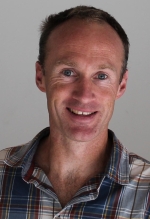
Dr. Philip Porter is a Reader in Geoscience and Geoscience Education at the University of Hertfordshire, affiliated with the School of Life and Medical Sciences and the Department of Psychology, Sport and Geography. His research focuses on glaciological processes in the High Arctic (Svalbard) and High Mountain Asia (Himalayas), with emphasis on hydrological and sediment dynamics under climate change.
Porter's research spans glacier hydrology, supraglacial debris interactions, meltwater routing, and paraglacial sediment reworking. He investigates how temperature gradients in debris-covered glaciers affect melt rates, the role of supraglacial ponds in runoff regulation, and microbial communities on glacier surfaces. His work bridges fundamental glaciological processes with societal implications for water resource sustainability in vulnerable mountain regions.
Analysis of Porter's publication timeline reveals a progression from foundational studies on englacial conduits and sediment transport (2000-2010) toward climate-impact research (2015-2023). Recent work integrates remote sensing (terrestrial laser scanning, photogrammetry) with field measurements to quantify microbial carbon release, surface roughness evolution, and debris-mediated melt processes across Arctic and Himalayan glaciers.
Porter has secured research funding through projects including:
- Development of collaborative Glaciology Research with Norwegian University of Science and Technology (Santander UK, 2015)
- Glacier surface paraglacial sediment delivery (ARCFAC, 2009)
- Prevalence of composite suspended sediment particles (Nuffield Foundation, 2004-2006)
His research involves international collaborations with the Norwegian University of Science and Technology and the European Centre for Arctic Environmental Research, conducting fieldwork in Svalbard and the Himalayas while developing open-source monitoring instrumentation for real-time glacier observations.