معرفی
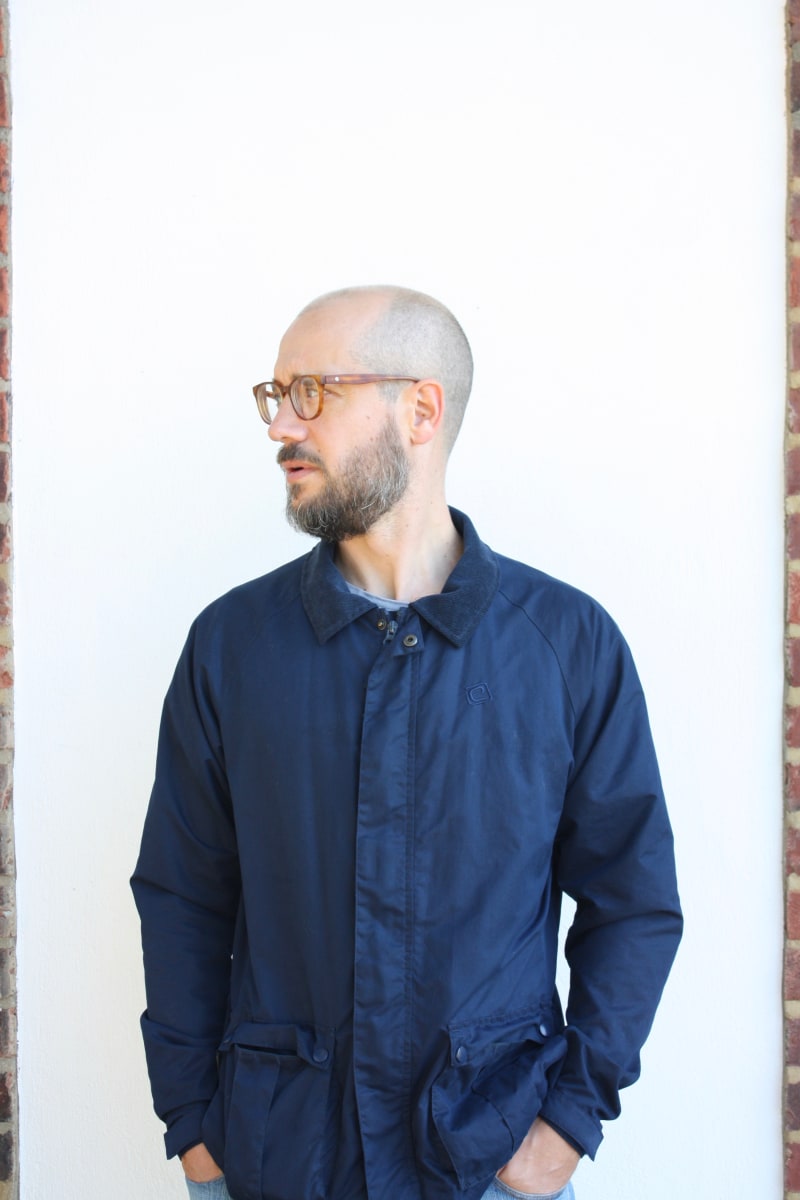
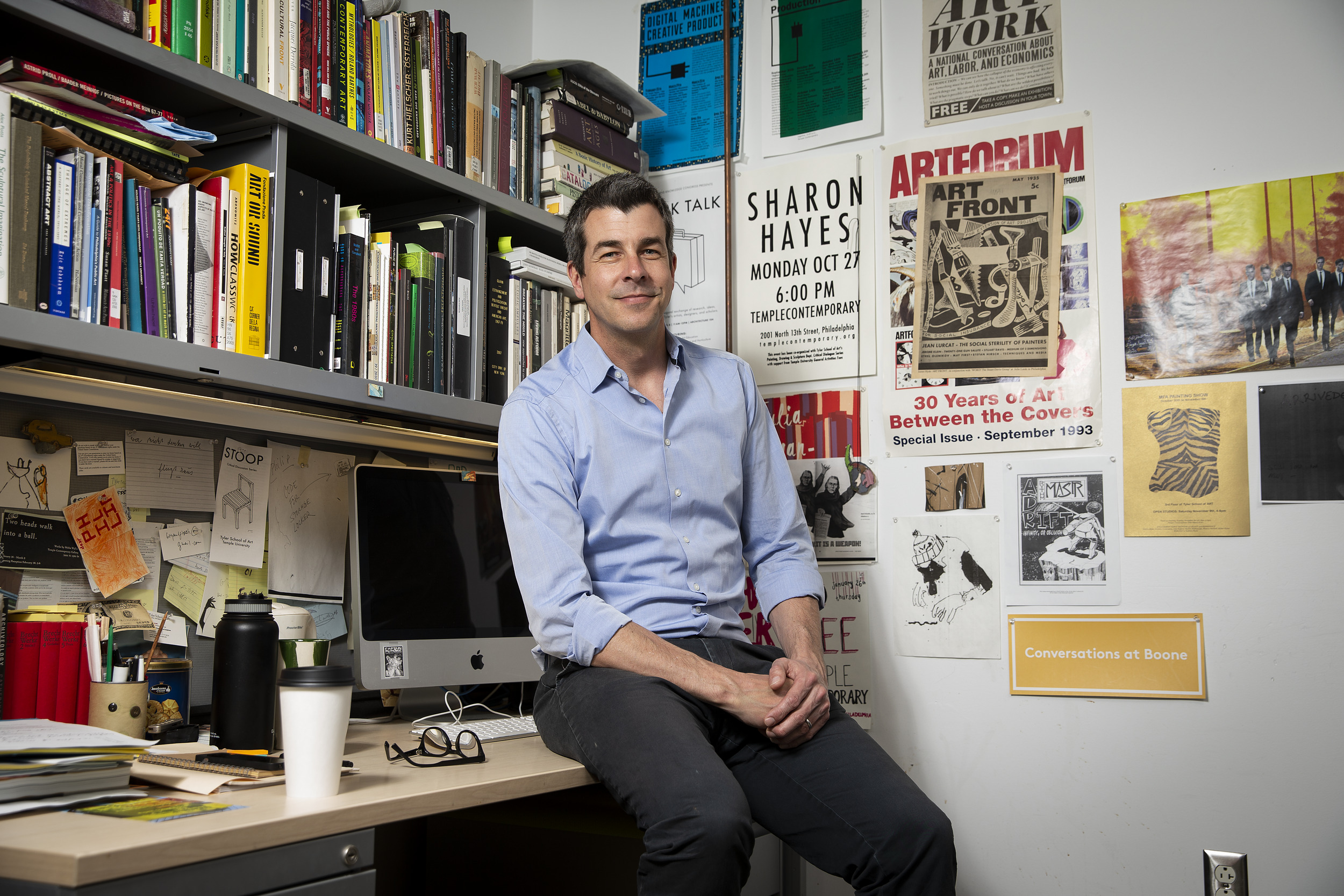
Philip Glahn is Professor of Aesthetics and Critical Studies and Chair of Art Painting at Temple University's Tyler School of Art and Architecture, currently on leave for Spring 2025. His academic career spans teaching appointments at Pratt Institute, Brooklyn College, and Hunter College, where he received the Presidential Award for Excellence in Teaching.
His educational background includes:
- PhD in Art History and Criticism from the Graduate Center, City University of New York (2007)
- MS in History, Theory and Criticism of Art and Architecture from Pratt Institute (1998)
- MA in Cultural Studies from Universität Lüneburg, Germany (1997)
Glenn's research interrogates art as technology, labor, and activism through lenses including avant-garde strategies, digital media's social formations, radio's public sphere interventions, and Brechtian pedagogy. His current work examines utopian concepts in telecommunications art, particularly analyzing collectives like Mobile Image that merge artistic practice with communication technologies to challenge technological determinism.
His publication trajectory reveals consistent engagement with art-technology intersections, evolving from Brechtian socialist frameworks to contemporary digital collectives. Key thematic threads include labor politics in networked environments, avant-garde tactics repurposed for digital activism, and utopian imaginaries within telecommunications art. The award-winning Mobile Image research demonstrates how art collectives function as critical infrastructure for technological discourse.
Notable recognitions include:
- Fulbright Fellowship supporting international research
- Helena Rubinstein Fellowship for Critical Studies at Whitney ISP
- Hunter College Presidential Award for Excellence in Teaching
- Art Journal Award (2020) for Electronic Café scholarship
- Frank Jewitt Mather Award (2025) for Mobile Image book
Research funding includes prestigious fellowships enabling deep investigations into art-technology relationships, while his teaching excellence reflects in Hunter College's Presidential Award. His scholarly contributions span journal articles in Art Journal and Afterimage to critical anthologies exploring art's political economies. Current projects continue examining how communication technologies reshape artistic labor and utopian possibilities.
His work centers on telecommunications art collectives as laboratories for technological critique, with Mobile Image serving as a primary case study demonstrating how artistic communities model alternative technological futures through collaborative practice and infrastructure building.