معرفی
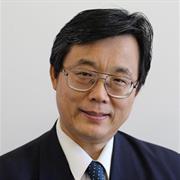
Phil Bartie is an Associate Professor in the Department of Computer Science at Heriot-Watt University's School of Mathematical and Computer Sciences in Edinburgh. His research integrates spatial analysis with environmental and social issues, focusing on how geographic information systems can address urban sustainability challenges. Current affiliations include active supervision of PhD students and collaboration with interdisciplinary teams across environmental science and social policy domains.
His research interests center on Geographic Information Systems (GIS), spatial data analysis, and environmental informatics, with specific applications in blue space accessibility, urban planning, and energy policy analysis. Work examines how natural environments impact wellbeing, particularly during crises like the COVID-19 pandemic, and investigates public attitudes toward energy transitions using social media analytics and mixed-methods approaches. Key methodologies include geospatial modeling, Twitter activity mapping, and solicited research diaries for longitudinal wellbeing assessment.
Recent publications reveal strong trends in spatial analysis of environmental-social intersections, particularly examining UK public discourse on fracking through Twitter geotagging, climate change belief systems influencing energy attitudes, and restorative benefits of inland blue spaces. His work consistently bridges technical GIS capabilities with societal challenges, contributing to UN Sustainable Development Goals related to sustainable cities and climate action.
Phil Bartie actively supervises PhD students and contributes to research grants focused on urban environmental systems, though specific grant details aren't publicly enumerated. His REAL corpus dataset (2016) demonstrates expertise in creating multimodal language resources for spatial reference resolution.
Research occurs within interdisciplinary teams addressing urban sustainability, with emphasis on translating geospatial analysis into practical urban planning applications and environmental policy recommendations. Current projects examine spatial dimensions of energy transitions and nature-based wellbeing interventions in urban contexts.