معرفی
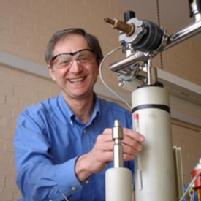
Peter J. Sadler is a Professor of Chemistry at the University of Warwick, where he has held a Chair since 2007 and served as Head of Department. His research focuses on the design and mechanism of action of metallodrugs, including anticancer, antimicrobial, and antiviral compounds, with a strong emphasis on bioinorganic chemistry and coordination chemistry.
Educational Background:
- BA, MA, DPhil in Chemistry from the University of Oxford
- Medical Research Council Research Fellow at the University of Cambridge and National Institute of Medical Research
Research Interests: Sadler’s work explores photoactivatable metallodrugs, luminescent theranostic agents, and catalytic organometallic drugs. His projects integrate atomic resolution coordination chemistry with molecular cell biology, using advanced techniques like synchrotron x-ray absorption, fluorescence mapping, and mass spectrometry to study metallodrugs in cancer cells and tissues.
Publications & Projects: Recent studies include the development of organoiridium photosensitizers for mitochondrial targeting, metallomacrocycles for antiviral applications, and photoactivated platinum complexes for DNA damage. His group also investigates molecular chronotherapy and supramolecular hydrogels for targeted drug delivery.
Scientific Awards & Affiliations:
- Fellow of the Royal Society (FRS)
- Fellow of the Royal Society of Chemistry (FRSC)
- Fellow of the Royal Society of Edinburgh (FRSE)
- EPSRC RISE Fellow
- Honorary Fellow of the Chemical Research Society of India
- Honorary Fellow of the Chinese Chemical Society
- Fellow of the European Academy of Sciences
Teaching and Supervision: Sadler supervises PhD and Master’s research projects, mentoring students like Wenying Zhang and Marta Palau Requena. His team includes postdocs such as Dr. Cinzia Imberti and Dr. Huayun Shi.
Laboratory & Collaborations: The Sadler Group collaborates internationally and industrially, employing cutting-edge techniques like confocal microscopy, TEM, and synchrotron x-ray fluorescence to map metal complexes in cells. Their work bridges inorganic chemistry and biomedical applications.