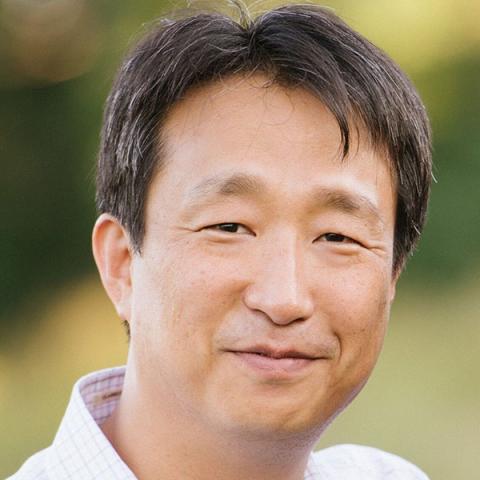
Peter G. Barr-Gillespie
استاد · Hair-cell transduction
Oregon Health & Science Universityمعرفی
Peter G. Barr-Gillespie, Ph.D., is a Professor with the Oregon Hearing Research Center and an affiliated scientist with the Vollum Institute at Oregon Health & Science University (OHSU). He has been with OHSU since 1999 and held significant administrative roles including associate vice president for basic research (2014-2017), interim senior vice president for research (2017-2018), and chief research officer (2019-2025). From 2011 through 2020, he served as scientific director of the international Hearing Restoration Project.
Dr. Barr-Gillespie earned his bachelor's degree in chemistry from Reed College in 1981, completed his Ph.D. in pharmacology at the University of Washington in 1988, and finished a postdoctoral fellowship with Jim Hudspeth at UCSF and UT Southwestern Medical Center in 1993. Prior to joining OHSU, he held a faculty position in physiology at Johns Hopkins University.
His research focuses on understanding the molecular mechanisms that enable hearing, particularly how sensory hair cells in the inner ear allow humans to perceive sound. His laboratory has made significant contributions to the field including development of methods for hair bundle isolation and analysis, characterization of tip links, determination of myosin proteins' roles in adaptation, and description of homeostatic mechanisms in hair bundles.
Analysis of his recent publications reveals a consistent focus on hair cell biology with particular emphasis on stereocilia development, structure, and function. His work spans multiple approaches including molecular biology, proteomics, electron cryo-tomography, and genetic analysis. The research demonstrates a progression from identifying key proteins to understanding their functional roles in hearing mechanisms and hearing loss pathologies.
As an NIH-funded investigator, Dr. Barr-Gillespie has maintained an active research program and published more than 125 scholarly articles, chapters, and reviews. He has been an invited lecturer at numerous research universities, academic conferences, and scientific events worldwide. His leadership roles in both institutional research administration and the international Hearing Restoration Project highlight his significant contributions to the field of hearing research.