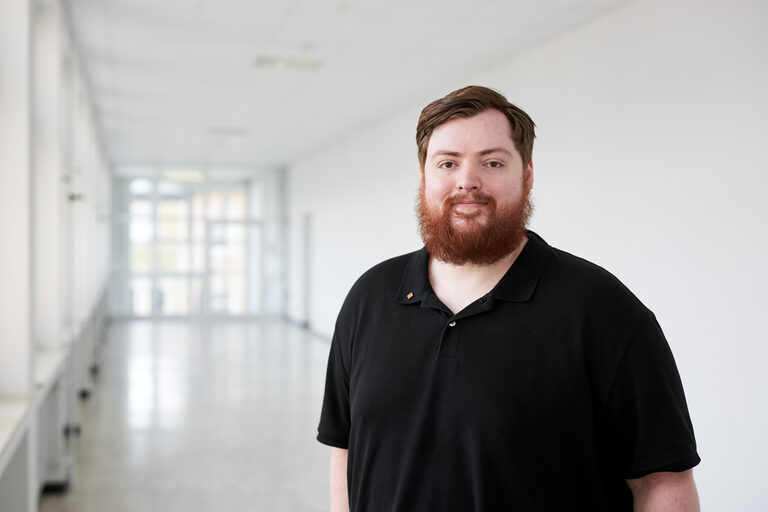
Paula Rubio-Fernández
استاد پژوهشی · Experimental Pragmatics
Max Planck Institute for Psycholinguisticsمعرفی
Paula Rubio-Fernández serves as a Senior Investigator (equivalent to Research Professor) at the Multimodal Language Department of the Max Planck Institute for Psycholinguistics in the Netherlands. She leads the Multimodal Reference Cluster, directing research on how humans use multiple communication channels to establish reference during interaction.
Her primary research interests focus on experimental pragmatics, particularly the interdependence between language and social cognition. She has developed a research program she terms cultural evolutionary pragmatics, examining how language and social cognition co-develop during human maturation and co-evolve during language change. Her work spans four complementary approaches: reference production across languages (Turkish, Japanese, Spanish), reference comprehension using virtual reality technology, reference development in infant-caregiver interactions, and reference modeling in multimodal language systems.
Rubio-Fernández leads a significant research program investigating referential communication across modalities (speech/sign, gaze, gesture), languages, and developmental stages. Her laboratory employs cutting-edge methodologies including eye-tracking glasses, head-mounted eye-tracking for mother-infant studies, virtual reality environments, and mobile technology for fieldwork across different linguistic communities.
Her career includes substantial research funding, including a Young Research Talent Grant from the Research Council of Norway (2014) for a 4-year project on cross-linguistic pragmatics and additional funding (2018-2023) for research on pragmatic development in blind, sighted and newly-sighted children in India, conducted in collaboration with MIT's Vision Lab and Project Prakash.
She directs research investigating how speakers of different languages synchronize gaze, pointing and speech during face-to-face communication, how listeners integrate multimodal cues to interpret references, how infants develop demonstrative understanding, and how multimodal language models process indexicals compared to humans.