معرفی
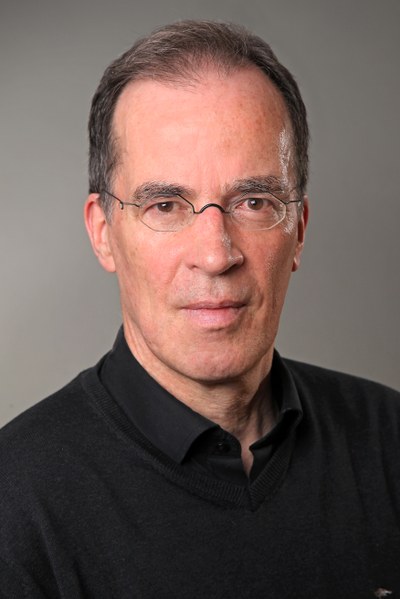
Paul Weindling is the Wellcome Trust Research Professor in the History of Medicine at Oxford Brookes University, affiliated with the School of Education, Humanities and Languages. He joined the university in 1998, having previously been at the Wellcome Unit for the History of Medicine, University of Oxford. His research spans the history of eugenics, public health, human experimentation since 1800, medical refugees, and corporate philanthropy in medicine.
His research interests focus on the ethical, social, and political dimensions of medicine in the 20th century. Key areas include Nazi medical war crimes, the development of informed consent, eugenics as an international movement, the role of the Rockefeller Foundation in global health, and the impact of medical refugees on British medicine. He has led major research projects on victims of Nazi human experiments and European medical refugees in Britain.
His most recent publications explore themes such as child rescue schemes, Nazi sterilization of mixed-race adolescents, the life of Josef Mengele, memorialization of victims at Spiegelgrund, and the Kindertransport from Vienna. Collectively, his work demonstrates a deep engagement with the moral legacies of medical practices under totalitarian regimes and the trajectories of displaced medical professionals.
- Wellcome Trust Programme Grant: 'Subjects' Narratives of Medical Research in Europe, ca. 1940-2001' (2012–2016)
- Wellcome Trust Strategic Award: 'Health Care in Public and Private' (2007–2014)
- AHRC Grant: 'Human Experiments Under National Socialism' (2007–2011)
- Claims Conference Grant: 'Victims of Nazi Medical Experiments' (2011–2014)
- Max Planck Institute Grant: 'Hirnforschung an Instituten der Kaiser-Wilhelm-Gesellschaft' (2017–2024)
Professor Weindling has supervised numerous research projects and PhD students, though individual names are not listed. He has advised national funding agencies including the DFG, CNRS, and Swiss Research Council, and serves as a Trustee for the Council for Assisting Refugee Academics (CARA). He has led international symposia, including a major event at Wadham College, Oxford, on Nazi human experiments.
He is actively involved in research networks related to medical history and exile studies, contributing to institutional memory and ethical reflection in medicine. His work continues to shape understanding of medical ethics, historical accountability, and the global movement of medical knowledge and practitioners.
حوزههای پژوهشی