معرفی
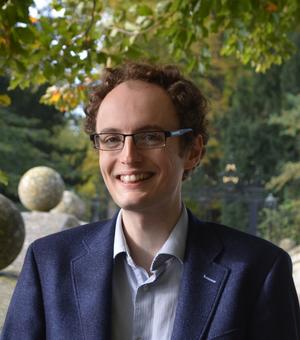
Dr Paul Cavill is a Senior Lecturer in Early Modern British History at the University of Cambridge's Faculty of History and a Fellow of Pembroke College. He holds a DPhil from the University of Oxford, where he was a junior research fellow at Merton College. Before joining Cambridge in 2013, he held academic positions at Bangor University and the University of Leeds. His research focuses on the intersection of law, religion, and politics in early modern England, with particular attention to heresy trials, parliamentary dynamics, and church-state relations.
Dr Cavill's scholarly journey began at Corpus Christi College, Oxford, where he completed both his undergraduate and postgraduate studies. His work bridges legal history, religious history, and political thought, examining how institutional frameworks shaped religious dissent and state authority. Key themes include the enforcement of religious conformity, the role of parliaments in shaping policy, and the material and textual culture of legal and ecclesiastical institutions.
In his publications, he explores topics such as the Henrician Reformation’s legal mechanisms, fifteenth-century ecclesiastical governance, and the socio-political impact of Magna Carta sermons. His 2009 monograph The English Parliaments of Henry VII, 1485–1504 remains a foundational text on early Tudor legislative processes. Current research interests include anticlericalism, heresy prosecutions, and the transmission of legal texts in late medieval England.
Dr Cavill’s academic contributions extend to editorial work, including co-editing Writing the History of Parliament in Tudor and Early Stuart England (2018). He actively participates in interdisciplinary research networks focused on religious persecution, legal culture, and early modern political rhetoric. His teaching at Pembroke College emphasizes primary source analysis and critical engagement with historiographical debates.