معرفی
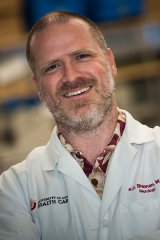
Paul Brennan is Professor of Clinical and Experimental Neurosurgery and Honorary Consultant Neurosurgeon at the University of Edinburgh and NHS Lothian. He leads the Brain Tumour Research Group within the Centre for Clinical Brain Sciences and is part of the CRUK Adult Brain Tumour Centre of Excellence. Brennan also serves as co-Director of the Compassion Initiative at the University of Edinburgh and previously co-chaired the Young Academy of Scotland (2015-2017).
His educational background includes:
- PhD in Using Novel Models of Glioma for Cancer Discovery Science from University of Edinburgh (2014)
- MB BChir (Bachelor of Medicine and Bachelor of Surgery) from University of Cambridge (2003)
- BSc from University of Edinburgh (2000)
Brennan's research spans both laboratory and clinical settings, applying molecular, epidemiological, and clinical investigation to improve patient care for brain tumour and traumatic brain injury patients. His primary research interests focus on understanding glioma development, particularly the transformation of low-grade gliomas into higher-grade tumours, developing novel diagnostic methods including blood tests and spectroscopic liquid biopsy, and creating innovative chemotherapy delivery systems such as palladium-activated prodrugs. He also works on optimizing clinical pathways for brain tumour diagnosis and has contributed significantly to enhancing the Glasgow Coma Scale tools.
His recent publications demonstrate a strong focus on translational neuroscience, with work spanning neurodegenerative processes in tau propagation, multimodal data integration for traumatic brain injury assessment, nanotechnology applications in tissue analysis, immunotherapy approaches for glioblastoma, and receptor signaling in cortical networks. These publications reflect his interdisciplinary approach that bridges molecular biology, clinical neurology, and technological innovation.
Brennan has founded eoSurgical Ltd, a surgical simulation training company that has expanded globally, and co-founded the British Neurosurgical Trainee Research Collaborative. His research is supported by major funding bodies including Cancer Research UK, Brain Tumour Charity, Chief Scientist Office, and EPSRC.
His laboratory work includes projects on malignant transformation of low-grade glioma, infrastructure development for brain cancer research, chromatin proteins as drug targets, and palladium-activated prodrug therapy. Clinically, he leads studies on brain tumour diagnostic pathways, circulating tumour DNA analysis, and treatments for chronic subdural haematoma.