معرفی
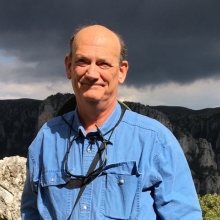
Paul Barnes serves as Professor and Rev. John H. Mullahy, S.J. Endowed Chair in Environmental Biology within the Department of Biological Sciences at Loyola University New Orleans' College of Arts and Sciences, where he has taught since 2004. His instructional portfolio includes Ecology and Evolution, Plant Ecology, and Global Ecology courses.
His academic foundation comprises:
- Ph.D. in Biological Sciences, University of Nebraska, Lincoln (1984)
- M.S. in Biological Sciences, University of Nebraska, Lincoln (1980)
- B.A., Augustana College (1978)
Dr. Barnes' research program centers on functional plant ecology under global environmental change, with emphasis on physiological mechanisms in grassland/savanna systems. His investigations span UV photobiology, plant-plant interactions, and resource relations (carbon/water/light), integrating field and laboratory approaches to document acclimation responses to solar radiation and climate stressors. Key methodological innovations include non-invasive UV transmittance measurements using chlorophyll fluorescence.
Analysis of his 2023-2025 publications reveals dominant leadership in UNEP Environmental Effects Assessment Panel reports addressing ozone-UV-climate interactions, with emerging focus on plastic pollution degradation pathways. Concurrent dryland ecosystem research examines soil-litter mixing effects on decomposition, demonstrating his capacity to bridge atmospheric science and terrestrial ecology.
Honors include the Rev. John H. Mullahy, S.J. Endowed Chair position and sustained contributions to international environmental policy through quadrennial UNEP assessments. His work directly informs Montreal Protocol implementation and climate change adaptation frameworks.
Dr. Barnes has mentored numerous graduate students in ecological research, with publications indicating NSF-supported collaborative projects on dryland decomposition mechanisms. His current work integrates photodegradation processes with biogeochemical cycling in vulnerable ecosystems.
Field research operations focus on dryland ecosystems with emphasis on UV radiation effects, while institutional leadership involves shaping global environmental assessments through the UNEP Environmental Effects Assessment Panel.