معرفی
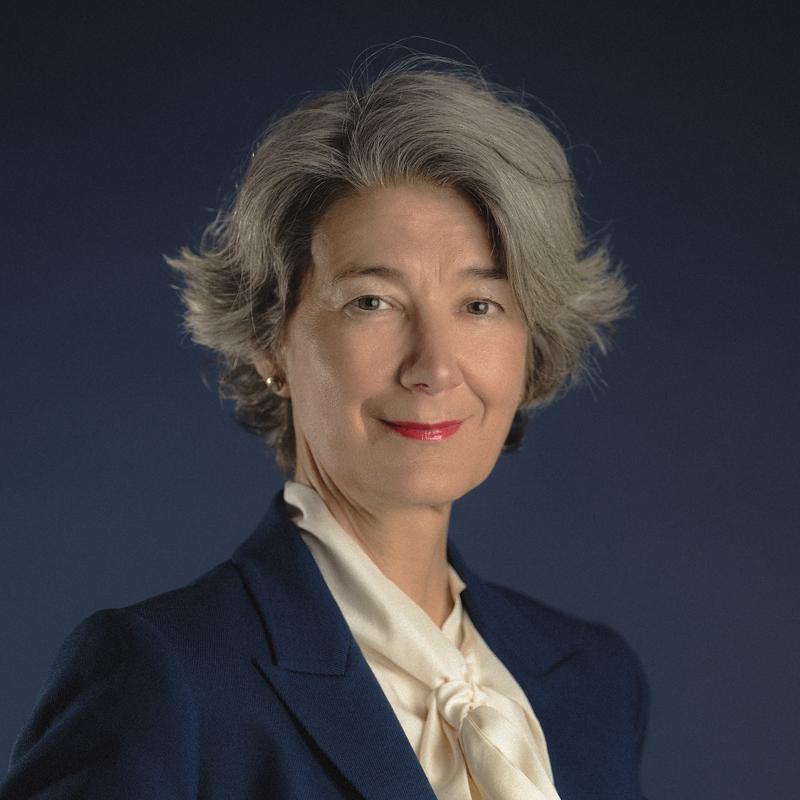
Patrizia Nanz serves as President of the European University Institute since March 2024, bringing extensive academic leadership experience to this role. Previously, she directed the Institute for Sustainability (RIFS) in Potsdam and served as Funding Director of the Franco-German Forum for the Future. Her academic career includes professorial positions at the University of Bremen and the University of Potsdam.
Her educational background spans philosophy at the Munich School of Philosophy and interdisciplinary studies at institutions across Munich, Milan, Montréal, and Frankfurt Rhine-Main. Before her academic career, she worked as a journalist and editor for prominent publishing houses, later obtaining her doctorate in Political and Social Sciences from the European University Institute.
Professor Nanz's research centers on democratic innovation, with particular focus on citizen participation mechanisms, European governance, public administration reform, and sustainability transitions. She has pioneered work on deliberative democracy through citizen councils and transdisciplinary approaches to complex societal challenges. Her scholarship explores how scientific knowledge can better inform democratic processes and how governance structures can adapt to contemporary challenges while maintaining democratic legitimacy.
Her publication record demonstrates consistent engagement with democracy-sustainability nexus, examining how participatory approaches can strengthen democratic institutions while addressing pressing environmental challenges. The trajectory of her work shows increasing focus on institutionalizing citizen participation within formal governance structures at local, national, and European levels.
- Fellow of the Institute for Advanced Study (Berlin)
- Visiting Professor at Massachusetts Institute of Technology (MIT)
- Advisory roles for European Commission, national and regional governments
Professor Nanz has supervised doctoral candidates including Azucena Moran, whose research examines deliberation in the green transition. Her leadership extends to directing research initiatives on democratic innovation and sustainability transitions, fostering interdisciplinary collaboration across academic and policy domains. She has built extensive networks across European academic and political institutions, positioning herself at the intersection of democratic theory and practical governance innovation.