معرفی
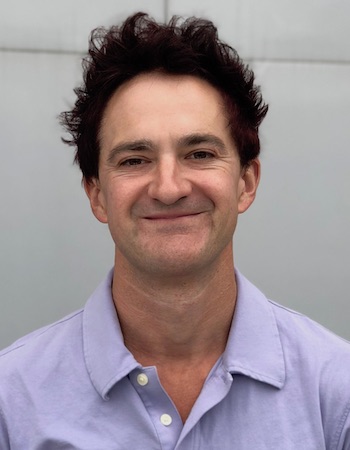
Professor Patrick Fairclough is a Professor of Polymer and Composite Engineering at the University of Sheffield, working within the School of Mechanical, Aerospace and Civil Engineering. He is based in the Department of Mechanical Engineering, having moved there in 2013 from the Department of Chemistry where he had been since 1997.
Professor Fairclough completed his academic journey with a BSc in Physics from the University of Birmingham in 1990, followed by a PhD in Neutron Scattering in 1995. After a brief period working as a service engineer, he pursued postdoctoral research in polymer science at UMIST (Manchester) from 1994 to 1997 before joining the University of Sheffield.
Professor Fairclough's research spans a wide range of polymer and composite materials systems, with a particular focus on innovative manufacturing techniques and sustainable materials. His work on mould-free manufacturing of carbon fibre composites represents a significant advancement in composite processing technology, eliminating the need for conventional tooling. His group also investigates thermoplastic composites that can be hydrolyzed back to monomers, creating potential pathways for recycling materials like PET from plastic bottles. Another notable research direction involves structural colour inspired by natural systems, particularly the ultra-white beetle scales, which has led to environmentally friendly alternatives to traditional white pigments like TiO2.
Professor Fairclough has secured significant research funding including the "Soft Nanotechnology" grant from EPSRC (2007-2012, £796,000) and the "KTA KickStart Funding Biologics" (2011-2012, £1,116,000). His research has resulted in numerous publications and patents related to block copolymers and composite materials.
His current research group maintains active projects in mould-free manufacturing, fibre splicing, and tailored fibre placement. The group utilizes advanced techniques including synchrotron radiation at the ESRF in Grenoble, France, for 3D tomographic mapping of biological structures, which informs their biomimetic materials research.